Absolute Elsewhere was an ephemeral British progressive rock band that had the famous drummer Bill Bruford in their ranks, and with whom they recorded in 1976 the album "In Search of Ancient Gods" which was based on a book by Erik Von Daniken, in a entirely instrumental work, without complexities, quite melodic and symphonic.
Considered a cult album nowadays we can delight ourselves with themes like the glider "Earthbound" the experimental "Moon City" the great "Miracles of the Gods" a a suite composed of 5 parts with a somewhat clonic beginning to King Crimson, which gives way to a more romantic part with a grand piano and a couple of extraordinary Mellotron moments or the experimental "The Gold of the Gods" and "Toktela" where we find magnificent developments of somewhat baroque keyboards and synthesizers.
A great instrumental album that combines simple and accessible passages with a lot of keyboard with experimental and electronic passages, and that has the incentive to listen and enjoy the ever-occurring drummer Bill Bruford.

With their album "Stratosfear", Tangerine Dream decided to expand their electronic concerns along the path of symphonism, a path with which they were already flirting in their two previous works. In any case, this new album shows a strong emphasis on structuring clear melodic ideas, as well as a more consistent inclination towards the orchestral use of mellotrons and synthesizers. The most evident samples of this aspect are embodied in the homonymous entry theme and the closing theme 'Invisible Limits'. The combinations between the various keyboards and the presence of well-defined guitar solos result in a hypnotic and stylized amalgam at the same time: one of the most exquisite moments is in the piano sonata and flute mellotron that closes 'Invisible Limits' , a moment of sublime beauty that allows the album to close with a clasp of magnificent distinction. But it's the most popular 'Stratosfear' track on this record: effective handling of attractive synth lines and lead guitar on a balanced, consistent basis of diverse keyboards (synths, organ, mellotron) and the occasional drum inputs showcase the talent of this trio to create careful improvisations within a well defined framework. The group does not stray too far from its primary penchant for electronic minimalism, but is now moving more freely through the lush forests of stylized symphony.
But "Stratosfear" is not just stylized symphony. It also contains passages full of mystery and some touch of sinister spirituality, as happens in ‘The Big Sleep in Search of Hades’. This piece begins and ends with a harpsichord playing held on a precise bass base and fed by subtle mellotron flourishes; What happens in between is a gloomy and gloomy intermediate made with curtains of mellotrons and various counterpoints of synthesizers.
Considering that this would be the band's last studio work with Peter Baumann (not counting "Sorcerer", the soundtrack for Friedkin's movie 'Wages of Fear'), we can consider "Stratosfear" to be a stupendous announcement of the swan song of the greatest formation of Tangerine Dream.

Nektar was a mythical British group that became German nationals (hence they sing in English), and that placed some of their works as classics of European progressive rock.
The early reviews for this group were somewhat misdirected, discrediting their music as the German response to the sounds of Pink Floyd and Hawkwind space rock.
To a certain extent their music has some of those characteristics and although there are similar sounds at times, Nektar is a very original group that always looked for its own sound. At first his trend was heavy but his next two albums were two masterpieces of progressive rock. After "Remember" they went commercial, but again they released two albums that are a musical gem. His career lasted until 1980, catching 20 years later with the movement of "redinosaurization" to meet again and try to recover what they lost two decades ago.
It is known by many of us that 1973 was perhaps the year with the best progressive rock harvest and Nektar is one of the groups that participated in it.
"Remember the Future" is a two-movement concept album. In it, the story of a blue bird "BlueBird" is related, who after having visited a certain planet repeatedly and found that people could not accept him for what he was and was criticized for his appearance, established mental contact with a blind boy "Boy", to whom he told stories of the past and the future in the form of visions.
Musically, the album resembles, due to its spatial sound constructions, "Rockpommel's Land" by the also German Grobschnitt, although with more powerful and less melodic moments. There are even times that are too rhythmic that could have served for a dance session and these times are very well complemented throughout its musical structure. There are good brakes, good changes of intention and these are not very predictable. It goes without saying that due to its history, its great melodic symphonic concept, its time and its printed art, "Remember the Future" became one of the 100 best albums of progressive rock.

The passage of the legendary Derek & The Dominos formation through music would be brief but intense, and with this "Layla and Other Assorted Love Songs", they would ensure their place in the Olympics of rock and roll forever.
We are facing a special album, considered one of the greatest in the history of rock and made by musicians of unmatched quality, with Eric Clapton, on guitar, Bobby Whitlock (organ, piano) Carl Radle (bass and percussion) and Jim Gordon (drums). And as a cult piece that is within the musical community, it is placed even more firmly at the top of the rock and roll altars, thanks to the stellar collaboration of the virtuous guitarist of the Allman Brothers and teacher of the Slide, Duane Allman, who helped this anthological work of musical art, be covered even more glory.
"Layla and Other Assorted Love Songs" is just perfect from start to finish, both in production, lyrics, recording or factors like the sentimental component. It also has a particularity that makes it unique: the absolute complicity of its components in each and every one of its themes. Clapton, Gordon, Allman, Whitlock and Radle expose a source of inexhaustible resources, elevating that musical art called blues to infinity.
It is often said that music is a state of mind and the proof can be found in themes such as the ballad "Bell Bottom Blues", full of melancholy and emotion, or "I Am Yours" that becomes soft, calm and full of sensitivity until "Layla" sounds, violent, wild and full of anger. "Layla" would be the hymn that would accompany Eric Clapton throughout his career and one of his most famous and remembered songs. The first time it was released worldwide was in this "Layla And Other Assorted Love Songs".
With other songs like the fantastic version of Jimi Hendrix's "Little Wing", or the splendid "Have You Ever Loved a Woman?", "Key To The Highway", or "Tell The Truth", or the classic "Anyday" we They show over and over again the incredible potential that this colossal formation possessed.
They barely asked to make this album alone and they would never meet again this unrepeatable band, but they did not leave without first leaving us this jewel of incalculable value that remains unalterable over time.

Considered as a classic among blues rock classics of all time, this sound adventure that had John Mayall as its main protagonist, is located as a cult work in the history of contemporary music and we can value it as a basic album in the discography of lovers of blues in general.
"Blues Breakers John Mayall With Eric Clapton", was published in England in 1966 and produced by Mike Vernon. A special mention deserves the impeccable recording by the record label Decca Records.
And of course, we will highlight the unmatched quality that the unforgettable members of the Blues Breakers had at that time, led by the godfather of white blues John Mayall, followed by Eric Clapton on guitar, a splendid John Mcvie (later bassist of Fleetwood Mac ) and resounding drummer Hughie Flint.
After working with The Yardbirds, Eric Clapton leaves the band because he sees in it a more commercial and pop orientation than in the beginning. Clapton was much more purist and was influenced after recording with the harmonica player Sonny Boy Willianson II, since he had collaborated with other blues legends.
Around the age of 20, Clapton had been playing at an excellent level for a long time and thanks to John Mayall, he would mature as a magnificent blues guitarist and even as a composer and singer, demonstrating a lot of maturity.
This group would record only this spectacular album, but as a result of it, they never lost touch, they coincided in numerous collaborations over time, which were essential to cover even more glory.
The original version includes 12 songs, several of them are anthological versions belonging to musicians such as Robert Johnson, Otis Rush, Freddie King or Ray Charles.
They open with a great "All Your Love" and they will no longer let you escape with that priceless gem that is "Hide Away", a tremendous instrumental property owned by Freddie King. They continue with three of Mayall's best classics "Little Girl", "Another Man" and "Double Crossing Time".
Fantastic the "What´d I Say" by Ray Charles, also monumental "Parchman Farm", which marks a frenetic rhythm of harmonica, to move to an emotional "Have You Heard". The magic influence of the blues myth par excellence, Robert Johnson, can be felt with "Ramblin´ on My Mind". Clapton and Mayall are thoroughly employed in the "Steppin Out", wrapped by a good section of winds. And what better way to end with that rough diamond that is "It Ain´t Right" by Little Walter.
This concludes this essential blues rock album, made by young musicians of great virtuosity and proven experience, with Mayall as conductor, a Clapton improvising and bringing out a clear and direct sound to his Les Paul guitar, a masterful John Mcvie on bass and a forceful Hughie Flint on drums.

Despite having a label with their name, Rare Earth were always strangers within Motown, a group of whites who made versions of classic black music with an added rock component. However, the records they made between 1969 and 1971 are authentic jewels of rock music and particularly, the album In Concert, the best live album released by the Motown label.
Many think that the two published versions of "Get Ready", a classic of Smokey Robinson, are recorded live, but the public that is heard in his second work was added later, on a recording made in studio. It is in In Concert where we can listen to Rare Earth totally live, in performances recorded in different parts of the United States, from Florida to New York. Perhaps the studio version is a little more complex and elaborate, but it is here where you can appreciate all the authenticity and all the know-how of one of the best bands of the early 1970s. It is an incredibly well recorded album and with musicians capable of improvising to unsuspected extremes on songs so many times covered as "What'd I Say" or "(I Know) I'm Losing You", "Get Ready", etc. The passage of time has not deprived this work of any of its virtues or of the freshness that it had at the time when it was played in discotheques around the world, and that is that good music is above fashion.

After the sensational 1977 "Cat scratch Fever", Ted Nugent decided to record a live album, and he did it, as we have commented here on other occasions, in a magical year for such albums, since in 1978 they were published some of the best live records in rock history. "Double live Gonzo" was one of them, without a doubt.
The first three albums published by this beastly guitarist were really great, constituting one of the best first stages of a discographic career. Therefore, a better time could not be chosen to capture all this power, creativity and rage in a live performance. Ted Nugent's concerts were famous for being hot and intense, so the main handicap was being able to transfer that heat and intensity to the grooves of a recording. Nugent not only did it, but also recorded one of the best live albums that are remembered. His guitar sounded magical, powerful, tremendous. The band, for its part, joined one hundred percent and giving a perfect replica to the mastery of this magnificent guitarist and composer.
If we add impeccable live sound to it, we can ask little more of a live album to become a classic from its very publication. All the songs are magnificent, forming a repertoire not only full of quality, but very well chosen and staggered. There is the success par excellence of that stage of Ted Nugent "Cat scratch fever", which was not missing in any of his concerts, but also the exciting jam that is "Motor city madhouse", with its more than 10 minutes of exciting duration. powerful rock, or the sensational version of "Baby, please don't go", by blues genius Joe Williams, passing by the fun "Wang dang sweet poontang" and not forgetting the brilliant and progressive "Stranglehold".
"Double live gonzo" is the testimony of the greatness of a man who in the 70s was one of the greatest guitarists and composers of rock, in addition to a spectacular showman, who in the 80s managed to maintain the type and who has subsequently degenerated greatly. However, nothing could tarnish the greatness of this wonderful live double album and the musical trajectory it shows.

The proliferation of pirated records made from concert recordings with ambient sound, without going through any kind of post-production in a studio or further training, led many groups to try to combat the negative image of their personality that bootlegs offered by editing their own live records, with professional teams, thoroughly preparing the performances and showing a much higher quality product. That was the idea that prompted the Who to record two performances, on February 14, 1970 on the Leeds University Campus, and on February 15 at Hull's City Hall, to release their first official live album. Even the sobriety of the cover - a mere cardboard-colored folder, with the title of the album over impressed as if it had been stamped with a rubber stamp which curiously recalled the aesthetics of pirate recordings from the early 1970s.
In the end, only the recordings of the Leeds concert hence the album's title would be used since, according to Pete Townsend's statement, the sound quality in Hull was not up to par and the material recorded, compared to the from Leeds, it wasn't worth it.
Instead, the "Young Man Blues", "Substitute", "Shakin All Over" and "Summertime Blues" that the Who recorded that historic night leave on their own an irrefutable proof of the degree of strength and genius they were capable of liberating live to the heights of 1970. Just a month before, they had toured Europe presenting 'Tommy' on tour in a series of special shows lasting more than two hours and forty-five minutes, and precisely because of marking distances, practically nothing Except for a few excerpts from "Tommy", "See Me, Feel Me / Listening To You" and "Sparks" within the medley included in the middle part of "My Generation" was included on this album.
In 'Live At Leeds' you can widely enjoy one of the main virtues that live records had at that time: The almost complete transformation of many of the songs compared to studio versions. Outside the studio, outside the pressures of sound engineers and producers, the groups sought, within an environment of creative freedom that today sadly has been lost, to turn the songs, recreate them, make each song a musical base on which to build another song, or pick up a cover in the early 70s was almost forced in most groups, when they played live, restructure the songs, give them a new vision, introduce improvisations in the intermediate parts , make medleys -in this Led Zeppelin and Deep Purple were consummate masters, and this is seen in their live records- and in this way turn each performance into something unrepeatable. This clearly happens with the Who of 'Live At Leeds', who squander improvisation, imagination and above all, devastating power, sound brutality as overwhelming as that of the most solid Heavy Metal bands - just listen to their version of "Magic Bus" to realize.

Edited in 1974 and produced by the great Al Kooper, "Second Helping" would become one of the crucial records of southern rock and one of the best known of the American band, since it contained one of the songs that are considered one of the classic rock, "Sweet Home Alabama".
But "Second Helping" is not only "Sweet Home Alabama", we are facing an album of transcendental importance, perfect from start to finish, which combined the energy of blues rock with the melodic delicacy of southern rock and the power of hard rock .
The initial and South American anthem "Sweet Home Alabama", gave way to a spectacular album, where there are excellent blues songs like "I Need You" or "The Ballad of Curtis Loew", the rhythmic and intense "Working To MCA" with some plucking and anthological riffs, to which is added "The Needle and the Spoon", one of the most widely used songs in many of its colossal direct.
With some dissimulation appears "Swamp Music", of southern style and that would be presented as a new musical genre, and as a final point the fantastic guitar version of the classic J.J. Cale "Call Me The Breeze" a version interpreted in a colossal way.
With an overflowing rhythm section, the excellent guitar trio formed by Gary Rossington, Allen Collins and Ed King added to the particular voice of Ronnie Van Zant, the Lynyrd Skynyrd left us this immortal album.
This is the beginning of the golden age of Genesis, after a first album in which pop trends were what prevailed in the atmosphere that was breathed in that work, here the band took a radical turn to their sound, they polished it to the maxim with the result of an album with dynamism, rich in nuances, achieving one of the most beautiful and timeless records in the history of rock.
With a beautiful idyllic cover of a castle tower dramatically cut by a knife, this album is a perfect exercise in high-rise symphonic rock from start to finish.
All the songs are extremely symphonic delicacy, from the initial and delicious "Looking For Someone" to the rock and to some extent something visceral "The Knife", passing through the pastoral "Stagnation" or the dynamic and beautiful "Visions of Angels" .
"Trespass", is not only the first pages of a great book, it is also a masterpiece where on each page there are no verses, phrases or words that were not left over or were written with simple filling.

While the Sex Pistols were pure rage and little else, The Clash proposed other alternatives much more interesting and rich nuances to their punk rock style.
In "London Calling", The Clash take influences from different styles such as ska, reggae, rockabilly and commercial pop, fused with their tremendous punk base.
With an attractive cover, which has become a rock icon, The Clash demonstrate at 19 the songs that make up this double album, the maturity necessary to be considered seriously by critics and the general public.
All this has placed this iconic album among one of the best albums in rock history.
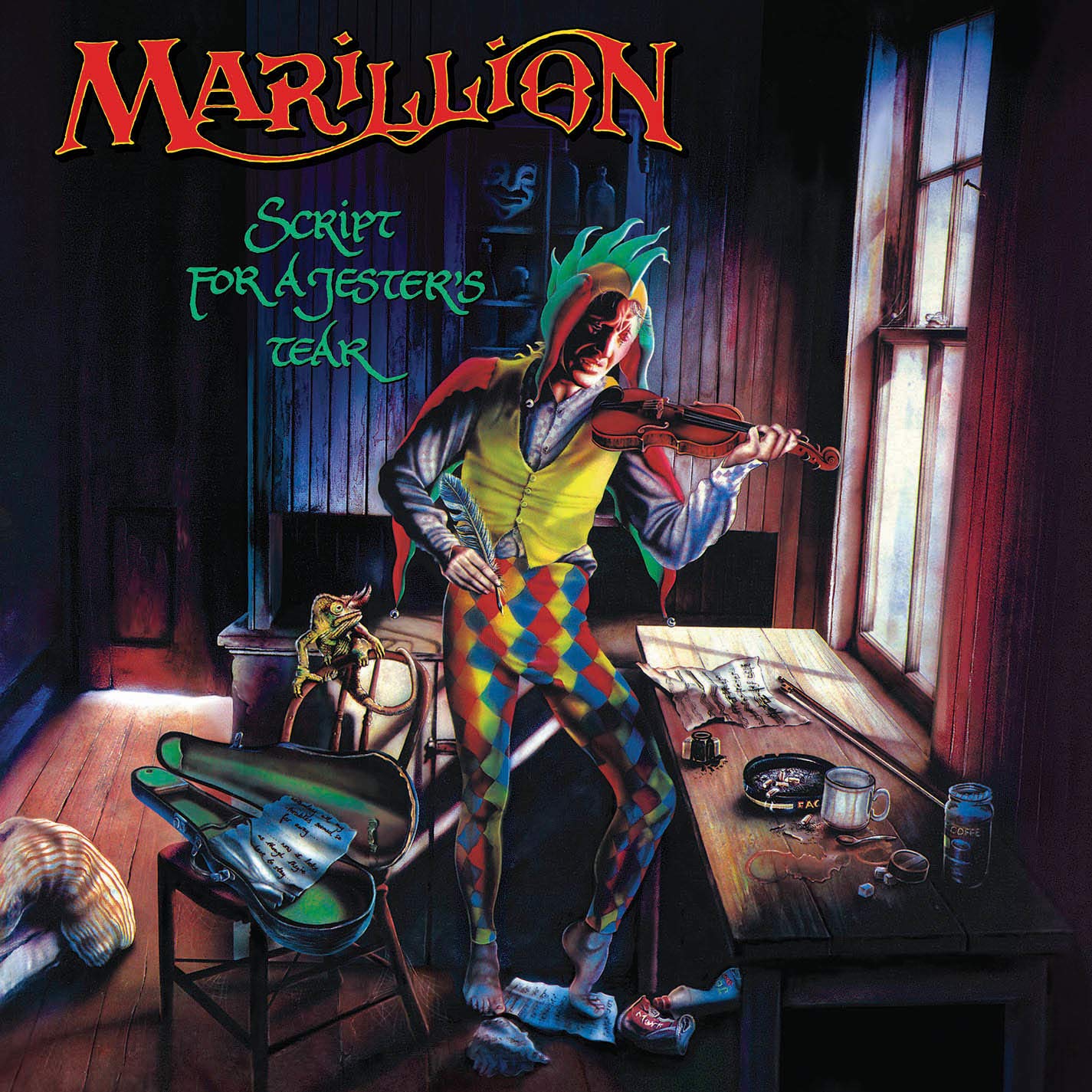
With this album they debuted one of the greatest bands of the progressive neo; Marillion, a debut album that would achieve a perfect union with the sound of Peter Gabriel's Genesis and a style much more accessible to the general public.
It was also the album that would cause controversy among progressive rock fans, because they seemed like a clone of the aforementioned Genesis, with a pompous, complex, dynamic and harmonious rock.
Masterful songs like "Script For A Jester's Tear", "Chelsea Monday", "Forgotten Sons" or "Garden Party" are the perfect counterpoint for the commercial and more accessible "He Knows You Know",
They make up one of the paradigm albums of the 80s and a masterpiece of progressive neo.

Canned Heat were one, if not the best, Blues-Boogie band ever, led by the great voice "Bob Hite-The Bear" (The Bear, due to his physical appearance and body fat) and the depressing minimalist virtuoso "Alan Wilson- Blind Owl" (blind owl, due to his great lack of sight and large glasses).
Canned Heat were a band that truly marked a before and after in the evolution of the genre that we must remember that it was stagnant in the mid-sixties, and thanks to musicians like Bob and Alan they managed to regenerate again strongly the authorship of the great bluesman forgotten, and they marked a chair not only for their ability to interpret, but for their superiority over others in adapting the genre and merging it with the more "electric lysergic" and sometimes with the stubborn "acoustic-minimalist" virtuosity,
Canned Heat were formed in 1965, when "Alan and Bob" met in Los Angeles in 1965, in a record store, specifically in the Jazz-blues section, both were fans of the genre, (it is known that the Bear, owned a huge room full of vinyl, Eps and 45 rpm singles from Boogie, which he collected little by little until his death in 1981).
In 1967, they recorded their third album on the "Liberty" label and in 1968 it was released under the title "Boogie with Canned Heat" produced by "Skip Taylor", releasing the single "On the Road Again" by Floyd Jones "as a hit of the album, within a few months it was already number one in sales and in many countries, being a worldwide success and a true Blues-Boogie and Rock classic.
This superb double live album was long cataloged, the best live in history by many rock critics and fans.
A live loaded with heroic guitars, subtle voices and rhythmic bases perfect for the unique style that only Wishbone Ash knew how to do, elegant and high quality rock.
Recorded from 17 to 24 June 1973 in various locations (Newcastle, Portsmouth and Memphis) here band delight us with immortal jewels such as "The King Will Come", "Warrior", "Phoenix", "Rock´n´Roll Widow" or "Throw Down The Sword", all of them wasted with feeling, and emotion to each note, with that great way of playing these wonderful compositions on double guitar.
It is not surprising that many other bands later use the same configuration; Judas Priest or Iron Maiden to give only two examples were influenced by the mythical Wishbone Ash.

Inspired by the Raspberries and the most energetic groups of the 60s like the Who, The Knack took the influences of power pop and hard rock that would earn them a lot of credibility among critics and the public in the late seventies and early eighties.
The triumphant breakthrough on the charts thanks to his legendary song "My Sharona", from his debut album "Get The Knack" (1979) and the band's seventies new wave look, contributed to some
Built under a guitar riff, "My Sharona" is a popular song, belonging to the pre-eighties environment of power pop, which became one of the most famous songs of all time.
It is easily recognizable by its catchy riff, written by the band's guitarist Berton Averre, long before he joined The Knack. Also featured in the song is his brilliant interpretation of the bass line, which appears on the playlist of many aspiring bassists, often cited as an example for the excellent technique he exhibits.
However, this song weighed down on other very prominent ones such as "That's what the little girls do", an outstanding melodic and rhythmic theme or the harmonic "Let Me Out", without forgetting the tender ballad "Maybe".
But after the success, the members of the group despise the role of the press, avoiding interviews and acting arrogant, a fact that turned against the American media, who began a smear campaign against the group known as "Knuke The Knack" ("Destroy The Knack") accusing them, among other things, of using misogynistic lyrics in their songs.
The following albums, "But the little Girls Understand" (80) and "Round Trip" (81) were one commercial failures, especially the latter and the group dissolved in an atmosphere of disputes between its members.
However, a decade later they met again to publish new works that would go completely unnoticed; "Serious Fun" (91) and "Zoom" (98).

Chris Isaak, is one of those rare multi-faceted artists who with almost no noise and excel achieves the opposite.
In addition to being a singer and songwriter, he has worked as an actor, televisión showman and even an amateur boxer - his nose is good proof of this. This Californian by birth starred in one of the best ballads of the eighties.
Almost in the middle of that decade he had signed a contract with W. Bros. Records for his first album, "Silvertone". In 1987 he recorded a second self-titled album featuring the well-known "Blue hotel". That same year, six songs are extracted from these two recordings for the first two chapters of the US CBS series "Private Detective".
In 1989 their third album would arrive, "Heart Shaped World", which included the precious "Wicked Game", which was chosen for the single from that album. However, it would not be until a year later, in which this theme was included by David Lynch to be part of his movie "Wild at Heart", and it would be from here when it began to have a lot of repercussion. The success was such that the following year Warner published a "Greatest Hits" entitled "Wicked Game", taking advantage of the song's massive success and with that theme as its main claim, something unusual on the other hand, because despite Isaak He was already considered an excellent musician, he only had 3 studio albums published.
"Wicked Game" is a slow and languid halftime of magnificent execution, where the guitar solos are truly impressive, quite a contemporary classic.

When John Waite left the band The Babys, with whom he had recorded five irregularly successful albums, in the early 1980s, he began a solo career publishing some of the best AOR albums of that decade.
Thus the song "Change" belonging to his debut album "Ignition" (1982) would be placed at the top of the charts and would draw the attention of AOR (Album-Oriented Rock) fans and broadcasters across the country to this gender.
Two years later he published his second work titled "No Brakes" (1984), this work caught the world's attention, especially in Europe and the United States, for this song "Missing you", which reached number one on the "Billboard Hot 100". This magnificent halftime theme, performed with equal parts strength and sensitivity, sold nearly two million copies worldwide and would eventually be covered by leading performers, including Tina Turner and Rod Stewart.
In 1988 Waite brought together former members of The Babys to form the "Bad English" supergroup. In 1989, Bad English's ballad "When I See You Smile" (written by Diane Warren) also achieved significant success, although John Waite would return to solo work soon after. Since 1995, he has produced five solo albums, some of them highly celebrated by fans and critics alike.
Some of those albums such as "Temple Bar" (1995), "When You Were Mine" (1997), "The Hard Way" (2004), or "Downtown Journey of a Heart" (2007) were very well received in the field of the AOR.

Gilbert O'Sullivan was an Irish boy who spent much of the second half of the 60s trying to make a living from music, even recording some songs for small English independent labels without luck.
At one point one of his demos is heard by Gordon Mills, Tom Jones' manager and owner of the MAM Records company. Mills is convinced by what he heard, and makes an appointment with young O'Sullivan.
However, this meeting was about to ruin his career: Gilbert showed up in a kind of school uniform: shorts, brush cut hair, a ridiculous tie, colored socks and a "teddy boy" cap.
Mills, horrified, insisted that this image could not do him any good, but Gilbert did not get off the donkey, and that is how he began to act both in the premises provided by Mills and in his first television performances (in which he also wore ever a woolen jumper with a huge "G" embroidered in garish colors).
Gilbert O'Sullivan began to be known more for his clothing than for his songs, but that was only the first step.
The second was to show his talent in a series of compositions that were to form part of his debut album, in 1971. One of them was the excellent "Nothing rhymed", which made the public begin to take that strange boy seriously. who dressed so gracefully and played the piano in the Elton John style.
Gaining the attention of the public, Gilbert O'Sullivan takes a somewhat more serious image, and focuses on creating more compositions that will lead him to be accepted by critics as well. Then came 1972, his magical year. "Alone again (naturally)" first, and later "Claire", dedicated to the daughter of Gordon Mills, led to absolute international stardom.
With a pop style with sophisticated orchestral arrangements and easy-listening soft-rock, he conquered the British and North American sales charts with his mellow and elegant melodic behavior and his keen ability as a lyricist.
In 1980 his name returned to everyone's lips thanks to the melodious and catchy song "What's in a kiss", his latest great success.
Since then, several albums have been compiled with best hits, some of them achieving success in the sales charts.

Steve Winwood is considered one of the great pioneers, architects, and geniuses of British pop in the 1960s, especially for his status as a “child prodigy” of music through his R&B startup and subsequent avant-garde work.
Stevie will be the key element of groups like The Spencer Davis Group, Traffic or Blind Faith, three of the greatest British rock bands of all time.
Singer, guitar, keyboard player, lyricist and producer, his restlessness would make him intervene in numerous projects after the separation from Traffic in the mid-1970s.
In 1977, he released his first album "Steve Winwood", which despite high commercial expectations (and which went on to become a double platinum record) only reached number 22 on the Billboard 200 album list.
The "child prodigy" of the 60's, would have to wait until the early eighties to know success as a soloist, with the album "Arc of a Diver" (81), which with a superb quality places him in the American and English rankins, the same as the single "While you see a Chance". This work takes Winwood into the 80s with all its fresh creativity and talent at the service of its constant experimentation.
By the time Santana released his album "Festival" (1977), he already had seven magnificent records on his back, some of them masterpieces such as "Abraxas", "Caravanserai" or "Borboletta".
In "Festival", Carlos Santana once again leans towards a more commercial sound away from jazz rock and psychedelic sounds from his first four albums and, as in his previous work "Amigos" (1976), the formula of instrumental songs achieves the expected success And if in the previous one "Europa" would be the hit of the album, here "Revelations" would take over, a reflective theme with a final explosion of rock, funk and Latin sounds.

Van der Graaf Generator has no parameters or predecessors, his music is completely opposite to that established in progressive rock, and this is not the typical rock band. It is not even remotely similar to any of its from the same times. They lacked the usual bass and guitar, consisted of a very jazzy and technical drummer (Evans), a keyboard duet (Hammill with Banton), and a saxophonist-breeder, David Jackson. The band wove an amalgam of dense sounds with incredible and dark layers of melodies, traced one after another with endless canons, which lasted more than 10 minutes. Moments of total peace are mixed, well represented in his music, with total chaos and pseudo schizophrenic and lysergic distortion.
In their first stage they recorded formidable albums like "The Least We Can Do Is Wave To Each Other" (1970), "H to He, Who Am the Only One" (1970) or "Pawn Hearts" (1971), all of them considered masterpieces of progressive rock.
During the group's second active stage (1974-1978), more interesting works were recorded. Such is the case of “World Record” (76), album in which Peter Hammill expands his instrumental horizons giving more space this time if his electric guitar
The experimentation is successful and allows the group not to repeat themselves emulating the two previous works "Godbluff" and "Still Life" and this gives the album a unique personality
A result that can be seen in this work that at times is gloomy, dense, exciting and melodic.
Proof of this is its extensive theme “Meurglys III (The Songwriters Guild)”, a very dense suite, totally progressive, but curiously enough, from minute 13:13 onwards, reggae rhythms (although it does not appear to be), forming an already legendary and fundamental theme in the group's career and in the history of progressive rock in general.

In 1978 Emerson Lake and Palmer published their latest work titled "Love Beach", an album that was a resounding failure and largely a comic and repulsive work, nothing worthy of a band as important as they were ELP, it would precipitate the dissolution of the mythical trio shortly after.
In honor of the truth, we must clarify that this album was recorded due to the demands of the record company and not on ELP's own initiative.
Almost ten years later, both Greg Lake and Keith Emerson wanted to revive the band and publish a new album, but the third component Carl Palmer was already immersed in his own band Asia, so this long-awaited meeting would soon go to ruin to disenchant their fans.
However, Emerson's endeavor paid off when they recruited the great drummer Cozy Powell instead of Palmer.
With this formation, which coincided with the initials of their surnames, with the original (ELP) they entered the studio and recorded the honorable album "Emerson, Lake and Powell" published in 1986.
An album where Emerson and Lake resort in part to their roots, with long progressive themes, adaptations of classical music and instrumental ballads, but far removed from the pompous compositions of yesteryear, resorting to a fresher and more modern sound, according to the times that ran without fully entering the topical commercial sounds that other leading bands of the 70s made in the 80s.

In 1971, after the publication of the album "Looking In" by the British blues rock band Savoy Brown, three of its members, singer and guitarist Dave Peverett, bassist Tony Stevens and drummer Roger Earl, left to found one of the best and more charismatic Hard Rock & Boogie Rock bands.
It goes without saying that Foghat's influences and roots are more than evident, especially in his first albums.
However, this new band shows a style harder and more energetic than its mother band, with high voltage rock and hard rock.
In their early years they achieved a great reputation in the United States thanks to albums such as "Rock and Roll", "Energized", or "Rock and Roll Outlaws", which were published in the period from 1973 to 1975.
In 1977 the one that will become his best and most sold work, the direct "Foghat Live", is published, with more than two million copies sold only in the USA.
An album which only consists of six songs, becomes one of the essential live shows of rock, with an anthological repertoire of their successes and some versions, such as the fast-paced "Fool for the City", the anthology "Slow Ride" or the rhythmic version of Willie Dixon's track "I Just Want to Make Love to You".

In 1973 Black Sabbath lived quite convulsive moments due to drug addiction by all its members, especially Ozzy Osbourne, so for the recording their fifth album they retired to a castle in Wales, in which Apparently it would be a quiet and remote environment, the perfect excuse to find the necessary inspiration to compose and record new material.
From that ancient castle and behind ancient walls, the band would create one of their best albums, but not without having gone through strange and complicated situations, throughout the recording process.
Apparently during the sessions, the presence of ghosts were common, on the other hand one of the rooms was the subject of an inexplicable fire.
As ugly as it was, the band did not stop getting high or getting drunk, as expected in such a strange place, and that that mysterious and dark medieval castle spread part of the dark charm and mystery to this magnificent work, with a remarkable eclectic effervescence in the spirit and spirit of his songs.
Will they be drugged or not, the mystery that permeates this album added to the musical quality left one of the philosophical works of heavy metal
In "Sabbath Bloody Sabbath" the band seems to have reached compositional maturity opening their music with different nuances, well differentiated with respect to their previous works, and although they never renounced their darker roots with their devilish dense riffs and their dark rhythms, here they already included other instruments such as synthesizers and keyboards giving a more psychedelic touch to his music, highlighting themes such as the one that gives the album its title, a sublime and burly song that would become one of its classics.
The rest was an exercise in magical songs that mysteriously ran through the mazes of the dark place, such as the magnificent "Killing Yourself To Live", the psychedelic "Who Are You?", The rhythmic "Looking For Today" or the progressive medium "Spirit Architect".

By the time "Stage Struck" was released in 1980, Rory Gallagher already had eight albums on his back in his solo career, plus several more with his germinal band Taste.
Along with Gary Moore and Phil Lynott, he is undoubtedly one of the most extraordinary musicians that have given birth to Ireland, an exceptional guitarist, with a unique talent, a rock purist who has carved out a solo career such as those that today are no longer known. you can see.
At the end of the 70s, the good guy from Gallagher came from publishing his two hardest works, "Photo Phinish" and "Top Priority" where he had left behind the experimentations of yesteryear to focus on the purest and most visceral hard rock
Recorded in different locations during the world tour to present the album "Top Priority", we find a super revolutionized Gallagher who, along with his support group, bassist Gerry McAvoy and drummer Ted McKenna, are offering an incendiary repertoire of brutal hard rock and blues, that leave us breathless from the first minute to the end of the album.
Rock arsonists like the initial "Shin Kicker", the brutal "Wayward Child", "Brute Force and Ignorance" or hard rock gems like "Follow Me" or "The Last of the Independents", leave the listener perplexed at an anthological demonstration pure rock.
With this direct, which we could classify as a fascinating complement to his legendary direct "Irish Tour 74" and "Live in Europe" published years before and to which we could add his direct with Taste "Live Taste" and "Live at the Isle of Wight", reaffirms that what was really brilliant about this guitarist were his live shows with that vital spirit that he possessed, always full of strength, punch and energy.

This was one of the albums that raised the most expectations when it was published in 1969, and that is that David Crosby, Stephen Stills and Graham Nash had abandoned their respective already established and enormously popular bands to join forces under the name of CSN.
These three bands were The Byrds, Buffalo Springfield and The Hollies, a fact that had never happened before, causing stupor on the one hand and surprise on the other.
Each of those bands lived at the end of the sixties moments of splendor, on the one hand The Byrds had released the album "The Notorious Byrd Brothers" that although it had not surpassed magnificent works like its first three works, it was a remarkable work of folk rock, on the other hand the Buffalo Springfield's had released the wonderful "Buffalo Springfield Again" and their final work "Last Time Around" and finally The Hollies came from publishing their work "Butterfly" a minor album that nevertheless kept them in the top of the hit lists.
They were one of the first super bands in history, alongside the British Cream, giving rise to a brief fad of the late sixties introducing the concept of rock musicians as free agents to form supergroups.
His first album named after the band, is a compendium of melodies and vocal harmonies, which together with the guitar play and the chord sequences of the songs served to get the general public into the field of acoustics and folk rock.
Country rock and folk rock from Crosby and Stills were the perfect counterpoint to Nash's British pop-rock style.
The unspeakable tune of Nash's travels on "Marrakesh Express", and Stills tribute to Judy Collins on "Suite Blue Eyes" catapulted them to the top of the charts, in part also because of her hippie thoughts and counterculture.
The album would reach millionaire sales and a Grammy for the best album in 1970.

In 1976 Al Stewart published his masterpiece, an album that made him one of the greatest singer-songwriters in history with one of the songs that have gone down in history as one of the contemporary classics.
When "Year of the Cat" was released, it quickly hit the top of the charts on both sides of the Atlantic, in addition to the eponymous song, the album contained memorable moments like "On the Border", "Broadway Hotel" or "On Stage before".
In "Year of the Cat", Stewart offers us one of his best pop compositions with folk traits, based on a glamorous vocal expression and based on a melody that seduces us from the first time we listen to the piano and has just fallen in love with his sax only. In a way it reminds us of Gerry Rafferty's 'Baker Street'.
It is not jazz, nor power ballad, nor blues, nor pop, nor rock. It is a mixture of brilliantly linked instruments. Some are giving prominence to the others in an absolutely masterful way.
This theme is also endowed with some progressive overtones, with immense, sublime moments, mainly seductive by the American public, which reminded them of the first Bob Dylan.
The lyrics, written jointly with Peter Wood and performed with a pleasant nasal voice, is another masterpiece for those who feel like poets and lovers of melodic music. A whole spiritual experience that has its origin in the film ‘Casablanca’ by Michael Curtiz, brilliantly interpreted by Humphrey Bogart and Ingrid Bergman.

On September 19, 1981, Simon and Garfunkel met again eleven years after their breakup as a duo, to offer a free concert in New York's Central Park, to more than 500,000 people.
The preparations for this massive concert was plagued by multiple drawbacks, on the one hand due to the pressures of the record companies of each artist, and on the other their ego, which finally reached a friendly agreement.
When the day came, they both went on stage and began with a repertoire where they gave an overview of the most successful of the duo's career.
Tracks like "Mrs Robinson", "The sound Of Silence", "Bridge Over The Troubled Water", "Homeward Bound", "America", "Scarborough Fair" or "The Boxer" sounded impeccable and beautiful, backed by the usual band of Paul Simon, which he put as an unappealable condition to perform at this concert.
In addition, the duo performed some versions of songs by other artists such as "Wake Up Little Susie" by the Everly Brothers or an exciting "Heart In New York" by Gallagher and Lyle sung by Art Garfunkel in a sublime way.
There were also moments for some songs from the solo repertoires of both, for example Paul Simon (accompanied on vocals by Garfunkel himself) performs "American Tune", "Me and Julio Down by the Schoolyard" or the rhythmic "Late in the Evening", although it would be the extraordinary "April Come She Will" one of the great performances of the night.
For his part, Garfunkel shows off his prodigious talent in an overwhelming "April Come She Will" that was greatly applauded.
The Concert In Central Park is considered one of the most famous and massive concerts in the history of a single artist, who curiously would be surpassed ten years later in the same place by Paul Simon himself, gathering more than 750 thousand people in his famous "Concert in the Park".
A year later, in 1982 the double album would be published, with a good part of the concert, obtaining sales that would exceed 4 million copies worldwide.

This is without a doubt the most influential and important electronic music album in history, as well as being the best-selling album globally (more than 25 million copies).
Son of the composer of soundtracks Maurice Jarre and outstanding student of one of the best Vanguard musicians of the 20th century, such as Pierre Schaeffer, Jean Michel Jarre would start at a very young age in the use of synthesizers and other electronic instruments.
In 1976 he would release his masterpiece, "Oxygene", an album that, based on the coordinates of the most repetitive contemporary music, with cyclical structures, clings to melodic and percussive patterns capable of competing with any catchy pop chorus.
The legacy of this enormous and magnificent work is based on several factors, on the one hand the revolutionary use of the impressive range of synthesizers and on the other the intelligent use of the stereo possibilities to produce a sound with surround effects and all with the conviction of a Jarre who knew how to define his style from this first great commercial success, an unmistakable style that managed to capture the attention of millions of followers around the world and that today continues to amaze and sound as if it were the day it was published.
After having made the promotional tour for the album "Relayer", the members of Yes decided to take a long break to release tension and also take the opportunity to launch their own solo careers.
So in 1976 Jon Anderson released his first album titled "Olias Of Sunhillow" where he shows off his skills as a musician.
The singer plays all the instruments: from the harp to the percussions, through the acoustic guitars and synthesizers, in addition, obviously, he explores his vocal performance with his characteristic delicacy,
All the songs were composed by him and he also took over the production of the album.
Here Jon Anderson approached the album in a conceptual way, the atmospheric sounds, the delicacy, the natural and spiritual meaning of the musician resemble the music of Vangelis, with whom at that time they were united by a great friendship, noting the great influence that the musician Greek had on this album.

In the mid-1970s, Alan Parsons was already an accomplished producer and world-renowned sound engineer.
He had participated in some of the best albums of the time ("Abbey Road" by the Beatles, Pink Floyd's "The Dark Side Of the Moon" or Al Stewart "Year of The Cat").
Alan Parsons was not a musician as such, but a producer who had too many musical ideas which he wanted to put into practice by founding The Alan Parsons Project.
However, this project was never a group as such, Alan Parsons would use musicians in each of his albums, most of them session at his convenience.
Already in his first album "Tales of Mystery and Imagination" included Eric Woolfson as a solo singer and lyricist, this work based on stories by Edgar Allan Poe was his first success both in criticism and the fervor of the public.
From here Parsons would rely on Woolfson to write the lyrics of the music he composed and then they recruited the most suitable musicians for the concept to be developed in each work.
So for his second album "I, Robot" based on another book, this time a science fiction album by Isaac Asimov, he would have guitarist Ian Bairnson, bassist David Paton, drummer Stuart Tosh or Andrew Powell on string arrangements and keyboards among many others.
"I, Robot" is an album with complex instrumental arrangements, although it was nevertheless commercially attractive, where the vocal space was a simple decorative element, despite having a cast of great voices such as Steve Harley or Lenny Zakatek.
At the time it was considered that the album was technically very advanced for its time, with a really remarkable sound (it still is), and today "I, Robot" is still considered a milestone and a masterpiece of musical engineering.

A year after their incredible album "2112", Rush continue on their triumphant path releasing "A Farewell To Kings" which opens the second leg of the group.
This new stage was characterized by being the most progressive of the group's extensive career, however it did not come surprisingly, since in his previous work the progressive sounds were present, although it is here that Rush acquires full maturity.
The compositions become much more pretentious, with a symphonic trend and greater refinement, with a greater variety in the use of acoustic guitars and more complexity in electrics, a greater role in percussion and the presence of synthesizers that add textures. and melodic and sophisticated environments.
Here also appears the first song to be released as a single, "Closer To The Heart" which becomes very popular immediately.
The rest is as spectacular as it is sober with jewels like "Xanadu" where the band demonstrates its amazing virtuosity, the rocker "Cinderella Man", the sensitive "Madrigal" or the superb "Cygnus X-!".
Although the best would be to come in the following works, this would be next to "2112", the cornerstones of some of his masterpieces that would soon arrive.


By the 1980s, the vast majority of leading bands of the previous decade had before them a great challenge, renew or die, and Uriah Heep were the ones who opted for the first.
They gave a spectacular twist to their style and entered the limits of commercial heavy metal and they would do it with great success, as they well reflected in their album "Aboming", published in 1982.
When it was released, the world of hard rock and heavy metal were surprised with this fantastic album, when practically nobody trusted them anymore. Themes like "Too Scared To Run" became from the first moment as a kind of generational anthem of the fans of heavy metal, who were surprised by this great addictive theme, an authentic sample of the resources that could be used to get a metal jewel, great riffs, vocal and powerful choruses, a perfect production and a fast-paced rhythm.
The rest of the album was by no means inferior to the star theme, with outstanding pieces such as "Chasing Shadows", "Running All Night (With The Lion)", or "On The Rebound", making this superb collection of songs one of the cornerstones Heavy Metal from the 80s.

Almost towards the end of 1968, Jimi Hendrix's third album was released together with his band Experience, titled "Electric Ladyland" and it was the only success as a single for a Hendrix song, the stunning version of Bob Dylan's song "All Along The Watchtower".
Likewise, the album would reach first place with global sales that far exceeded one million copies sold.
With a cover that caused quite a stir for how suggestive it seemed, (a harem of naked women), the album's design generated, for obvious reasons, forceful criticism, to the point that many stores refused to sell it in their day. Finally, it was changed for a new cover, destined for the American market, the most reticent to what they call "sexually explicit", where instead of featuring the kind and suggestive girls, there was a drawing with a psychedelic air.
Musically this album contains an unexpected but essential twist in Jimi Hendrix's style, with an evolution of his sound, less commercial, due to the complexity of the arrangements, but very rich in nuances, his most experimental and innovative work, with atmospheres and chords more sophisticated, creating almost impossible guitar lines, with jazz chord progressions, fused with funk and the deepest blues.
Here Hendrix shows the maturity necessary to become a great guitarist and also a great composer and musician.
In addition to the aforementioned "All Along The Watchtower", the album contains a cast of great songs that have passed to posterity as perfect guitar exercises, such as the experimental "And The Gods Made Love", the sinister and experimental "Voodoo Chile", or the aggressive "Burning Of the Midnight Lamp".
"Electric Ladyland" became a complete guitar manual for any guitar hero in the later decades.

Live! Bootleg is a double live album, which collects live recordings of Aerosmith from 1973 to 1978.
His name was designed this way, to give it a certain pirate character, with hardly any touch-ups in the studio and even with intentional errors in the set list of songs.
By the time this album was released, the band was already established in the United States thanks mainly to capital works such as "Get Your Wings", "Toys In The Attic" or "Rocks", but also as the popularity of Aerosmith was in Increase, internal problems did, mainly derived from drugs, especially by Steven Tyler and Joe Perry.
Even so, the hard rock of this mythical band here does not suffer at all, where songs like "Sweet Emotion", "Last Child", "Black In The Saddle", "Mama Kin" or Walk This Way", without forgetting the eternal "Dream On", are combined with versions like "Come Together" by the Beatles, "Mother Popcorn" by James Brown or "Train Kept A-Rollin" by the Yardbirds.
"Live Bootleg" is arguably Aerosmith's best live recording, well above the "Classic Live" published in the 1980s or "A Little South of Sanity" in the late 1990s.
"Abbey Road" was the last great published Beatles masterpiece and a great way to say goodbye to the world of music through the front door.
An album where they mixed their most popular style with rock and the most complex and conceptual aspect that they had already done with "Sgt Pepper´s ..."
An album as solid as it is outstanding, with an impeccable production and tremendous creativity, and where George Harrison showed that he was an emerging genius with jewels such as "Something" and "Here Comes The Sun", two of The Beatles' great songs from all its history.
Lennon's tremendous "Come Together", the hypnotic "Maxwell's Silver Hammer", the great "Oh Darling", both by McCartney, the extensive and psychedelic "I Want You (She's So Heavy)" by Lennon, or the rock "Octopus's Garden" by Ringo Starr are the hotspots of a devastating album that even today amazes those who listen to it.
With "Heavy Weather", the Weather Report was no longer able to continue to be on the cusp of jazz rock worldwide, but also to be a band more accessible to the public furthest from the jazz scene.
Here Joe Zawinul along with Wayne Shorter join one of the most imaginative and best bassists in history such as Jaco Pastorius.
All of them together create a jazz of pure magic and fused not only jazz with rock, but also with different world music such as African, Oriental or Brazilian.
Highlighting a single album from the impeccable record label of the Weather Report is practically impossible, but it is perhaps this album that best shows the talent of this wonderful jazz-rock band.
To start with his now mythical celebratory theme "Birdland" and his opening riff, as popular and well-known as "Smoke on the Water" in rock, the vibrant "Teen Town", the dancer "Palladium" or the sensitive "Remark You Made ". An absolute masterpiece that was also his most successful album.

Van Morrison's long and fruitful career has been characterized by his folk, blues and rhythm and blues influences, and not for that reason his style has been a hybrid compendium of these genres but a personal and non-transferable style.
"The Lion from Belfast" was already the leader of his tip band Them in the sixties, which he would end up dissolving in 1966 mainly due to his disappointment with the music business.
Such was the feeling of mistrust Morrison had towards the record industry, that when he began releasing his solo albums, he took full control of his recordings and decided not to grant interviews or press conferences thereafter.
This would ultimately mark his career to the point of becoming a kind of sullen genius blessed by the press and adored by fans over the decades.
Already with their pyramid albums, starting with their debut "Blowin 'Your Mind!", They showed an unequal stylistic connection, going from intimate folk to masterpieces like "Astral Weeks" with that conglomerate of soul, gospel and blues, without their albums being actually cataloged in any genre.
In 1993 he published his twenty-second album "Too Long in Exile" which becomes one of his most commercially successful works, an album where jazz, blues and R&B are the common denominator.
Subjects like the overwhelming R&B "Blues Lonely Avenue", that extraordinary feeling of blues with "Big Time Operators", the jazz music "Close Enough for Jazz", the exquisite "I´ll Take Care of You" or the version of the mythic "Glory" where he is accompanied by the blues man John Lee Hooker, they make up an extraordinary and superb album, worthy of the great Northern Irish musician.

In the mid-seventies Robert Stigwood was one of the magnates of Hollywood, he had financed such mythical works as "Tommy" or "Saturday Night Fever", he was also the owner of one of the most fruitful record companies of that decade, RSO Records .
The RSO managed the careers of several superstars (Bee Gees, Yvonne Elliman, Eric Clapton, Andy Gibb ... among many others) and, as a record label, released the soundtracks for Fame, Sparkle, The Empire Strikes Back, Return of the Jedi, Times Square, Grease (with which it would manage to sell more than 30 million copies worldwide), Grease 2 and Saturday Night Fever (with more than 35 million copies sold worldwide). The release of Grease and Saturday Night Fever made RSO one of the most financially successful record labels of the 1970s.
In mid-1977 he wanted to bring the legendary The Beatles album "Sgt Pepper's Lonely Hearts Club Band" to the big screen, loosely adapting the musical that a few years earlier had premiered on Broadway under the name "Sgt. Peppers Lonely Hearts Club Band On The Road ".
The re-adapted script was a caramelized rock opera that mixed Beatles songs from their album "Sgt Pepper´s ..." and "Abbey Road", and even to take an analogy even further Stigwood would achieve that the producer of the very same The Beatles George Martin and engineer Geoff Emerick will participate as producers.
For the film they had an impressive cast of great artists who at that time were in their greatest splendor, on the one hand Peter Frampton who arrived in full after his overwhelming success in his double "Comes Alive", on the other hand the Bee Gees, who had starred in one of the most successful soundtracks in history such as "Saturday Night Fever".
Without going into the plot of a movie that received fierce criticism from the press on both sides of the Atlantic, in the musicals, without being extraordinary, much less, if it had moments of lucidity by some of the artists who intervened .
In addition to those mentioned, Aerosmith, Alice Cooper, Earth Wind & Fire or Billy Preston among others would also participate.
Some of the versions are considered minimally successful among them "Come Together" performed by Aerosmith, "Get Back" by Billy Preston, "Got To Get You Into my Life" by Earth Wind & Fire or those performed by Peter Frampton and The Bee Gees On the other hand, there were others that drastically overshadowed the Beatles philosophy, such as those interpreted by Sandy Farina, Frankie Howerd or the grim version of "Maxwell's Silver Hammer" by Steve Martin.
Contrary to the double album that contained the soundtrack, the movie was a resounding failure, mainly because of the bizarre script that would be grotesque with actors who did not measure up such as Steve Martin, George Burns, Frankie Howerd or Paul Nicholas
Instead the soundtrack achieved the platinum record thanks in part to early sales before the movie was officially released.
From here on, the careers of fundamentally Peter Frampton The Bee Gees decreased enormously because of this resounding film, which however has become a cult film and album and a rare bird that for better or for worse has passed into the history.

FM is the soundtrack of the movie of the same title that was released in April 1978 and in the rest of the world in November.
With the advertising slogan "No Static At All" this movie narrates the adventures of a fictitious radio station "Q-Sky, which had managed to become the number one station in the North American West area due mainly to its musical repertoire.
But that popularity would lead to the confrontations of the disc-jockey in charge of the station Jeff Dungan and the investor bosses, who pressured him to emit much more publicity and less music.
The soundtrack is a kind of great compilation of the great hits of American music of the time, an impressive cast of artists and their songs, which has become one of the best compilation ever made and a cult album.
With a star-studded roster featuring Tom Petty, Steely Dan, Boston, Foreigner, The Eagles, Bob Seger, James Taylor, The Doobie Brothers, Linda Ronstadt, Steve Miller, Joe Walsh, Billy Joel, Queen, Jimmy Buffett, Dan Fogelberg or Randy Meisner among others, soon reached the million record sold.
All the songs included here are classics of rock, country or folk-rock, and practically all were top ten on the hit charts at the time of publication.
In 1979 the album would win the Grammy Award for best recording production and engineering, awarded to producer Roger Nichols, who until then was the one who regularly produced Steely Dan albums.

With his first album Santana would manage to cross genres and territorial borders, his mix of Latin, African and rock rhythms had a great impact, almost like no artist of his time.
That success would allow him to make an intense tour of the United States, participating among many other concerts in the famous Altamont with the Rolling Stones, on that fateful date where a fan was assassinated by a member of the "Angels of Hell".
After that successful tour, he would take a tour of the United Kingdom, participating in the Royal Albert Hall in London together with I´ts A Beautiful Day and Taj Mahal, all of which popularized him as one of the best rock artists of the moment.
Abraxas was their second album and in a few weeks it would reach the position of honor in the North American charts for six weeks, with sales figures that exceeded one million copies.
That would be somewhat unusual for a group that was preferably instrumental and that based their music on the fusion of rock with Latin rhythms.
African rhythms like "El Nicoya", the Hispanic sound always present in songs like "Samba pa ti", or "Oye como va", purely rock sounds being "Hope You´re Feeling", a good example of this, or the stupendous version of the Fleetwood Mac song, "Black Magic Woman" where Santana recreated her flaming guitar, her mythical melody, they formed an album that put Santana at the head of the rock greats, with her instrumental vehemence.

The sixth album by The Guess Who released in 1970 became their most successful album in the United States, reaching ninth place on the "Billboard Pop Albums" list, remaining for more than a year, and also their first Top Ten in that country.
It contains the superclassic that gives its name to the album "American Woman", a song that has been covered by many groups.
Created in Winnipeg, Manitoba, Canada, they were one of the first Canadian bands to establish significant success in their own country and abroad in the late 1960s and early 1970s. They were also the first Canadian rock group to be successful. No. 1 in the United States.
The album, however, was not up to the level of its two predecessor albums, but no one seemed to take that into account given the sheer brilliance of the single. As is often the case, Americans adopted the song even though it consisted of a tremendous barrage against their way of life, embodied in American women.
"American Woman" is one of the best known rock riffs in rock history and the most famous song by this mythical band.