With his thirtieth album, the masterful Bob Dylan returned after a period of releasing mediocre works that never quite reached their creative peak, although commercially he continued his successful streak of millions of albums sold worldwide. In "Time Out of Mind", Dylan returns to what he does best, with brilliant and dense compositions, bitter lyrics sung in his raspy voice, superb instrumentation, and excellent production. As was typical for Bob Dylan, his roster of collaborating musicians is impressive, featuring artists of the caliber of Jim Keltner, Duke Robillard, Tony Garnier, Daniel Lanois, and Brian Blade, among many others. The diverse repertoire is divided between nods to the exotic sounds of reggae in "Love Sick", the epic "Not Dark Yet", the bluesy "Highlands", the sharp blues-rock tracks "Til I Fell In Love With You", "Cold Irons Bound" and "Dirt Road Blues", and the rural blues of "Standing In The Doorway". Without a doubt, this is one of their best works, which, while not reaching the heights of their legendary releases from the sixties and seventies, far surpasses the musical meanderings of their eighties.
Showing posts with label Bob Dylan. Show all posts
Wednesday, March 5, 2025
Wednesday, February 5, 2025
Bob Dylan-Rough And Rowdy Ways (2020)
To speak of Bob Dylan is to speak of one of the geniuses of the 20th century, a musician as pioneering as he was influential, who has paved the way for thousands of musicians and numerous subsequent styles. Approaching his 80th birthday, the Minnesota musician gave us another of his acclaimed works with his thirty-ninth album, "Rough and Rowdy Ways". Here, he once again displays a perfect inventory of his most genuine essence, his literary grandeur, and his profound poetry. He narrates the needs of his country with elegance and intelligence, exploring a diversity of styles and themes, from country and folk sounds to rhythm and blues, rural blues, and rockabilly. Songs like "I Contain Multitudes", "Key West", "False Prophet", "Crossing the Rubicon", "My Own Version of You", and "Murder Most Foul" reflect one of his most personal and retrospective albums.
Wednesday, April 10, 2024
Bob Dylan-The Basement Tapes (1975)
"The Basement Tapes" is one of the landmark albums of American roots music, recorded in informal sessions at a farmhouse converted into a studio called Big Pink by Bob Dylan and The Band in 1967. The collaboration between Dylan and The Band dates back to the previous year when they were still called The Hawks and worked together on the Minnesota native's seventh album, "Blonde on Blonde" (1966). The result was an amalgamated collection of songs that navigate between folk, blues, and country rock, showcasing Dylan's most versatile side while The Band demonstrated why they are one of the most fundamental groups in rock history. Comprising an exquisite collection of songs, including standouts like "Tears of Rage", "This Wheel's on Fire", "Long Distance Operator", "Ain't No More Cane", "Ruben Remus", "Don't Ya Tell Henry", "Bessie Smith", "Tiny Montgomery", "Nothing Was Delivered", and "Open the Door, Homer", this album is a truly historic document. Beyond its musical merits, it showcased the impressive talent of all the musicians who contributed to this magnificent and fundamental masterpiece of rock music.
Wednesday, March 27, 2024
Bob Dylan-Dylan (2007)
“Dylan” is the title of a triple compilation album by the legendary Bob Dylan, containing 51 of his tracks that summarize his music from 1962 to 2006. This box set includes 3 CDs that review the history of one of the greatest musicians in history, from his first album, generically titled “Bob Dylan” and released in 1962, to his last, “Modern Times”, released in 2006, passing through such emblematic albums as “Freewheelin’…”, “Highway 61 Revisited”, “Blonde on Blonde”, “Blood on the Tracks”, “Desire”, “Street Legal”, and “Basement Tapes”... and so on, up to 45 albums in 45 years of his career (including live recordings, rarities, compilations, and bootlegs), with more than 500 songs, all summarized in this anthology, edited with great care and in chronological order, and in which the musician's fans participated. He actively contributed to the selection of this impressive greatest hits collection. A selection of tracks encompassing all stages of his career, from the acoustic sound of his early days, through his electrification with folk rock, his time with The Band, his forays into country, his songs related to religion and spirituality, his bluesy period, and so on. Classics such as "Blowin' in the Wind", "Like a Rolling Stone", "Hurricane", "Changing the Guards", "Knockin' on Heaven's Door", and "Subterranean Homesick Blues", among many others, make up this majestic compilation, which is undoubtedly a true anthology.
Sunday, January 2, 2022
Bob Dylan-Planet Waves (1974)
1974 was the year of the most spectacular, anticipated, and talked-about comeback in modern music history: Bob Dylan's. If it's difficult to study and analyze the reasons that might drive a great artist to remain out of the public eye for eight years (except for sporadic appearances), it's even more challenging to decipher the reasons for his return. Nostalgia? A desire to regain his leading role? The egocentric sense typical of great divas? Money? Dylan's withdrawal following his accident in mid-1966 has been studied in previous years. Bob's charisma, never inclined to explain or justify his actions, lends itself to all sorts of interpretations; therefore, the 1974 tour generated a flood of commentary, which he allowed to continue without offering any explanations. Dylan scholars reached complex but logical conclusions. Bob Dylan had been sending money to Israel under his father Abraham Zimmerman's name. His Semitic sensibilities, his Jewish roots, seemed more than enough to justify such an act. When the Arab-Israeli War broke out in October 1973, the Jewish people once again rallied around "their" cause. The need for money to finance a war, however short and triumphant it might be, as in this case, was urgent. When Bob Dylan announced his return to the road on December 12th, with a tour of twenty-one cities in the United States, the shock of the event was compounded by the prevailing political climate. The $350 million in profits was a significant sum, both for Dylan and for any cause. Leaving aside the political factor, Bob would generate a wave of news between the end of 1973 and the beginning of 1974. Dylan left his record company, CBS, and David Geffen (named "executive of the year") signed him to his label, Asylum Records. CBS's "Revenge" consisted of quickly releasing a self-titled album, "Dylan", featuring outtakes from other albums. Despite this, the LP went gold. Meanwhile, Dylan was recording his new album, "Planet Waves", with The Band. Released three years after his previous album, "New Morning", it was recorded in the studio as a cohesive work (Dylan had released a "Greatest Hits" LP and the soundtrack to the film "Pat Garrett and Billy the Kid" during that period). Later in 1974, another LP, a double live recording from the "Before the Flood" tour, was released. However, in August 1974, Bob claimed he had made a mistake signing with Asylum Records, prompting CBS to quickly make him an offer, which he accepted. Bob was returning "home" with another contract and more millions. The negotiations between 1972 and 1973, which had given the impression of a Dylan overly concerned with money, and the two sudden changes, from CBS to Asylum and from Asylum back to CBS, brought Dylan's likely motives for money back into the spotlight. Throughout the tour that began in January 1974, there was speculation that the money Americans paid to see him wasn't being used to buy bullets used to kill Arabs at the hands of Jews in the Far East. These claims were never confirmed. And in the end, the only certainty was the enormous success of Bob Dylan on that triumphant tour.
Monday, August 31, 2020
Bob Dylan-At Budokan (1978)
"Bob Dylan is the Picasso of the song" is how the legendary singer-songwriter Leonard Cohen referred to Dylan and that is how we can define this album "At Budokan" is a totally unexpected twist, an unprecedented musical variation on Dylan's sound and has nothing to do with his previously released work.
Dylan appeared in the land of the rising sun, accompanied by an outstanding band, altering several of his great classics, giving them an innovative and evolving sound. The album began with the perpetual “Mr. Tambourine Man”, one of the legendary songs of the genius from Minnesota, to continue reeling off hits like “Shelter From The Storm”, “Love Minus Zero / No Limit” or the immortal ballad “Ballad Of a Thin Man”, coming from his eternal “Highway 61 revisited” , we will pass with a certain air to Reggae in “Knockin 'On Heaven's Door” and that we can also appreciate in “Don't Think Twice, It's All Right” another one that undergoes an extraordinary change is “All Allong The Watchtower”, with a wind section and memorable guitar riffs.
As anecdotal data, the album ends with "The Times They Are A-Changin", (times are changing), coincidence or genius? ...
Originally, this musical work was recorded in 1978, during a tour that Dylan realized by Japan. At the time of the publication of this direct anthology and compilation in 1979, many of Dylan's followers and analysts criticized it harshly, even claiming that it was one of the worst albums in rock history ...
And it is that sometimes many years have to pass for the importance and quality of a famous work like this to be appreciated and recognized, by a musician whose songs elevated rock to the category of art.
Dylan appeared in the land of the rising sun, accompanied by an outstanding band, altering several of his great classics, giving them an innovative and evolving sound. The album began with the perpetual “Mr. Tambourine Man”, one of the legendary songs of the genius from Minnesota, to continue reeling off hits like “Shelter From The Storm”, “Love Minus Zero / No Limit” or the immortal ballad “Ballad Of a Thin Man”, coming from his eternal “Highway 61 revisited” , we will pass with a certain air to Reggae in “Knockin 'On Heaven's Door” and that we can also appreciate in “Don't Think Twice, It's All Right” another one that undergoes an extraordinary change is “All Allong The Watchtower”, with a wind section and memorable guitar riffs.
As anecdotal data, the album ends with "The Times They Are A-Changin", (times are changing), coincidence or genius? ...
Originally, this musical work was recorded in 1978, during a tour that Dylan realized by Japan. At the time of the publication of this direct anthology and compilation in 1979, many of Dylan's followers and analysts criticized it harshly, even claiming that it was one of the worst albums in rock history ...
And it is that sometimes many years have to pass for the importance and quality of a famous work like this to be appreciated and recognized, by a musician whose songs elevated rock to the category of art.
Saturday, August 22, 2020
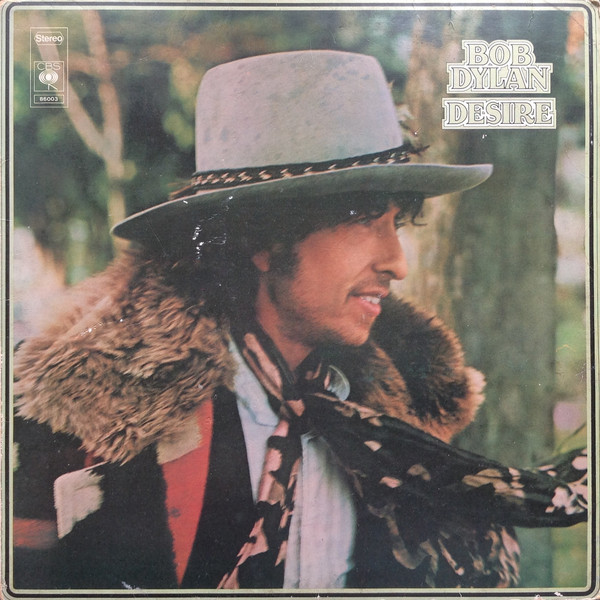
Bob Dylan-Desire (1976)
"Desire" is full of real life stories, such as "Hurricane", about the boxer Rubin Carter, wrongly accused of triple murder, or "Joey" about the mobster Joey Gallo.
The ballad "Isis", the harmonious "Mozambique" or the emotional "Oh Sister" and "Sara", acclaimed an album that was enormously well received by critics and their fans and that would become an emblematic rock album.
Thursday, July 30, 2020
Bob Dylan-Highway 61 Revisited (1965)
The first years of his career Bob Dylan would be marked by his vindictive facet in his lyrics and folk and acoustic sounds, a combination that attracted millions of fans around the world, at a time when there was a certain pessimism and nonconformity and with rebellion that involved Bob Dylan would raise passions with simple songs full of philosophy and direct and committed messages.
In 1965 Bob Dylan would give a change to his style by electrifying his sound and on the album "Highway 61 Revisited" he would demonstrate that the rock world had no secrets for him.
With a consistent and powerful band he made a memorable album that would seat a chair with an immense range of musical proposals.
Famous for containing the immortal "Like A Rolling Stone", a song considered by many to be the best song in all of rock history, with a splendid solid rhythmic base, harmonies that include basic instruments of the genre, such as guitars, percussion and the organs and a forceful and memorable melody, not to mention a countercultural lyrics that in this case literally destroyed the aristocracy and the upper class of society with poetic grace and cunning worthy of a noble reward.
However the album contained other great compositions like the folk rock "Desolation Row" or the blues "Tombstone Blues", making up this rock masterpiece.
In 1965 Bob Dylan would give a change to his style by electrifying his sound and on the album "Highway 61 Revisited" he would demonstrate that the rock world had no secrets for him.
With a consistent and powerful band he made a memorable album that would seat a chair with an immense range of musical proposals.
Famous for containing the immortal "Like A Rolling Stone", a song considered by many to be the best song in all of rock history, with a splendid solid rhythmic base, harmonies that include basic instruments of the genre, such as guitars, percussion and the organs and a forceful and memorable melody, not to mention a countercultural lyrics that in this case literally destroyed the aristocracy and the upper class of society with poetic grace and cunning worthy of a noble reward.
However the album contained other great compositions like the folk rock "Desolation Row" or the blues "Tombstone Blues", making up this rock masterpiece.
Wednesday, June 17, 2020
Bob Dylan-Blonde on Blonde (1966)
The transition to the electric field and embrace of more blues, R&B and rock strokes fully materialized in two later and essential works of his extensive career: "Highway 61 revisited" (1965) and "Blonde on blonde" (1966), two works teachers who extended their lyrical and musical talent with classics like "Like a Rolling Stone" (their most commercially successful single, reaching number 2), "Rainy day women # 12 & 35", "Visions of Johanna" , "I want you" or "Just like a woman", songs (with the single "Positively 4th Street") in which people like Michael Bloomfield, Harvey Brooks, Al Kooper and the members of The Band collaborated, a Canadian formation known until that moment as The Hawks (at that time they were the support band of Ronnie Hawkins) that would become his live support group and with whom he would tour the United Kingdom in 1966, being accused of being a traitor again to the folk cause for his British followers.
Saturday, May 23, 2020
Bob Dylan-Street Legal (1978)
"Street Legal" was Bob Dylan's eighteenth studio album, released by Columbia in 1978, in the midst of a turbulent personal life at the time, including his divorce in June 1977.
During the first part of his "Rolling Thunder Revue" tour and taking advantage of the summer, Dylan took a break and returned to his Minnesota farm. There he would begin to compose songs for his next album, among others he composed "Changing of the Guards", "No Time to Think" or "Where Are You Tonight?" ... six of the nine songs included in "Street Legal" were composed in Minnesota during that summer.
But during the recordings, another story occurred that deeply affected Dylan, on August 16 the news killed Elvis Presley.
By the time Street Legal was released, the staunchest purists shouted in the sky, due to the album's "commerciality" recognizing years later that tracks with "Señor (Tales of Yankee Power)" and "Baby, Stop Crying" were monumental compositions worthy of Any major Dylan work.
The theme of the album is about once again, religion as Dylan was still fully with that Catholic mysticism that had taken hold of him, although the plot has a more apocalyptic tone than in other albums, making reference to both the devil in "New Pony" and to God in the mentioned "Señor (Tales of Yankee Power)". The album obtained the third disc of gold in the United States for Dylan, after "Blood on the Tracks" and "Desire".
When Dylan embarked on his European tour, he was greeted by the public with a warm reception, and his two singles, "Baby, Stop Crying" purportedly inspired by Robert Johnson's "Stop Breaking Down" theme and the monumental "Changing of the Guards" were a hit at all the world.
During the first part of his "Rolling Thunder Revue" tour and taking advantage of the summer, Dylan took a break and returned to his Minnesota farm. There he would begin to compose songs for his next album, among others he composed "Changing of the Guards", "No Time to Think" or "Where Are You Tonight?" ... six of the nine songs included in "Street Legal" were composed in Minnesota during that summer.
But during the recordings, another story occurred that deeply affected Dylan, on August 16 the news killed Elvis Presley.
By the time Street Legal was released, the staunchest purists shouted in the sky, due to the album's "commerciality" recognizing years later that tracks with "Señor (Tales of Yankee Power)" and "Baby, Stop Crying" were monumental compositions worthy of Any major Dylan work.
The theme of the album is about once again, religion as Dylan was still fully with that Catholic mysticism that had taken hold of him, although the plot has a more apocalyptic tone than in other albums, making reference to both the devil in "New Pony" and to God in the mentioned "Señor (Tales of Yankee Power)". The album obtained the third disc of gold in the United States for Dylan, after "Blood on the Tracks" and "Desire".
When Dylan embarked on his European tour, he was greeted by the public with a warm reception, and his two singles, "Baby, Stop Crying" purportedly inspired by Robert Johnson's "Stop Breaking Down" theme and the monumental "Changing of the Guards" were a hit at all the world.
Wednesday, July 31, 2019
Bob Dylan-Blood On The Tracks (1975)
Amidst a period of tumultuous personal turmoil, Bob Dylan released his fifteenth album, "Blood on the Tracks", which, perhaps due to this tense situation, became one of his finest creative achievements of the 1970s. Recorded during the final months of 1974 between New York and Minneapolis, the album featured a large group of studio musicians, including Bill Berg (guitar), Paul Griffin (keyboards), Eric Weissberg (banjo), Billy Peterson (bass), Gregg Inhofer (keyboards), Peter Ostroushko (mandolin), and Richard Crooks (drums), among others. "Blood on the Tracks" is imbued with melancholy, bitterness, and disillusionment, all framed within an acoustic folk sound characterized by beautiful melodies and tight instrumental arrangements. The bittersweet laments of the brilliant "Tangled Up In Blue" and "You're A Big Girl Now" contrast sharply with the energetic and biting "Idiot Wind", the intimate "Simple Twist Of Fate" and "If You See Her, Say Hello", the optimistic and joyful "Shelter From The Storm", the folk-tinged "You're Gonna Make Me Lonesome When You Go", and the bluesy "Meet Me In The Morning". With this album, Bob Dylan reflected his more introverted and intimate side, and despite the generally melancholic nature of his repertoire, it achieved a number one hit on the Billboard charts and several platinum records for its considerable worldwide sales.
Wednesday, December 12, 2018
Bob Dylan-Slow Train Coming (1979)
In 1979, Bob Dylan spent five months attending Bible school and experienced a spiritual rebirth, converting to Christianity. He subsequently released the albums "Slow Train Coming" (1979), "Saved" (1980), and "Shot of Love" (1981), a period known as his Christian years. After establishing himself in the 1960s as one of the emblems of folk and protest songs, and later causing a sensation by electrifying his sound and bringing it closer to rock, in the 1970s Dylan oscillated between notable missteps and some superb works such as "Blood on the Tracks" (1975), "Desire" (1976), and "Street Legal" (1978). However, Bob Dylan left virtually all his fans stunned with the release of "Slow Train Coming" in 1979, an album in which the Jewish-born musician openly expressed his conversion to Christianity, and in which faith was the surprising narrative driving force behind all the songs. "Slow Train Coming" features a collaboration with Mark Knopfler and was produced by veteran R&B producer Jerry Wexler. The album reached the top of the charts in the United States, achieving platinum status and winning a Grammy for the song "Gotta Serve Somebody".
Subscribe to:
Posts (Atom)