Showing posts with label Style: Neo Progressive. Show all posts

Friday, April 24, 2026

Agropelter-The Book Of Hours (2025)

Here we have a band that fuses the immeasurable progressive spirit of the 70s with the neo-progressive style of the 90s, as crafted by the Norwegians Agropelter. This is what this band offers on their debut album, released in mid-2025. Echoes of the space rock of iconic bands like Pink Floyd, Camel, and Hawkwind, and the baroque style of Genesis, combined with the powerful krautrock of Eloy and the subtle progressive metal of bands like Änglagård and Anekdoten, blend perfectly to give us an impeccable and dreamlike album. Agropelter is actually a solo project of multi-instrumentalist Kay Olsen (guitars and multiple keyboards), who for this recording enlisted a large group of musicians including Jonas Reingold, Andreas Skorpe, and Mattias Olsson, among others. This debut is a true old-school instrumental epic, boasting breathtaking musical fluidity driven by vibrant, melodious guitars and inspired, captivating atmospheric keyboards. It ranges from sumptuous, whispering soundscapes to somber, passionate rhythmic passages, and energetic Renaissance and Baroque journeys.

Thursday, January 9, 2025

Johnny Bob-The Glass Hotel Tapes (2024)

Beneath a hazy, outlandish story set in a Berlin hotel in 2004, the German band Johnny Bob created a conceptual work that musically navigates between neo-progressive rock, the hypnotic sounds of Zeuhl, and art rock. Although the story itself is undocumented (it concerns the disappearance of an official US delegate representing her country at the Kyoto Protocol summit that year), this German quintet develops a work that at times seems more real and plausible than the official version. This Hamburg-based group was formed in the early 1990s, but didn't release their first album until well into 2017 with their debut, "Carnival of the Brahma-Sox". Their lineup consists of Carsten Diaz (vocals and guitar), Jörg Purfürst (bass, guitars, and keyboards), Philip Mestwerdt (drums), Ole Schützler (synthesizers), and Jürgen Ufer (guitar). The album and its story begin with the two-part suite "Shallow the Nykr", where they display clear Genesis influences through the strong German vocals and a hypnotic rhythm reminiscent of the German band Eloy. This magnificent piece is the album's high point, because from here the group takes a stylistic turn towards standard neo-progressive rock with tracks like "Night of the Prom" and "Mr. Genghis Comes to Town". Meanwhile, the pastoral Genesis sound is present in the beautiful "Kicker of Faye", while the rocking "Berlin Ahead" and the hypnotic "Corridors" close out this strange but enjoyable concept album of modern neo-progressive rock.

Monday, October 30, 2023

Frost-Milliontown (2006)

Frost was a one-off project led by keyboardist and producer Jim Godfrey, who wanted to venture into the challenging world of 21st-century progressive rock, composing highly enjoyable, high-quality material. To carry out this project, Godfrey enlisted some of the most renowned musicians of the neo-progressive rock scene at the time: IQ bassist and drummer John Jowitt and Andy Edwards, and Arena guitarist John Mitchell. The resulting album, "Milliontown", is a fascinating odyssey encompassing muscular and energetic passages, a wealth of electronic elements, and relaxing, atmospheric moments. All the tracks are built upon Godfrey's keyboard work, overlaid by a simply masterful instrumental explosion. From art rock pieces like "The Other Me", to the progressive metal of "No Me No You", passing through the progressive "Black Light Machine" or the superb pyrotechnic and musical display of the enormous suite "Milliontown", this discographic effort is a vigorous and impeccable work of the best modern progressive rock.

Monday, September 18, 2023

Fish-A Feast of Consequences (2013)

After a six-year absence, former Marillion singer Fish returned in 2013 with "A Feast of Consequences", his tenth album, following the brilliant "13th Star". This tenth album was released after Fish himself experienced several traumatic events, such as the end of his marriage and a painful bout of throat cancer from which he would eventually recover. As had happened years earlier, when the Scottish singer was with his original band, and as reflected in the album "Clutching at Straws", his personal struggles have often inspired his most powerful works, and "A Feast of Consequences" is the most palpable example of this. This album showcases a more mature Fish, with sophisticated art rock characterized by grand melodic compositions, ingenious lyricism, and clear British folk influences. The lyrics are socially conscious, addressing topics ranging from the futility of war to political intrigue, all treated with his charismatic insight. While not fully embracing progressive rock, there are glimpses of the avant-garde, such as the enormous suite "High Wood", an epic that incorporates elements of powerful rock, Celtic music, and exuberant symphonic sounds. The epic "Perfume River" is a subtle reflection that contrasts with the sophisticated pop of "All Loved Up", or the sumptuous "Blind To The Beautiful" and "The Other Side of Me", while the evocative "The Great Unraveling" is another highlight of this magnificent album by the towering Scottish singer.

Monday, June 26, 2023

Pendragon-The Masquerade Overture (1996)

Pendragon are one of the classic bands of the so-called neo-progressive rock movement, and along with Marillion, IQ, Pallas, and Galahad, they spearheaded a genre derived from the traditional progressive rock of the 1970s. With such compelling works as their debut album, "The Jewel" (1985), and subsequent releases like "Kowtow" (1988), "The World" (1991), and "The Window of Life" (1993), the band, led by guitarist and singer Nick Barrett, reached their creative peak with their fifth album, "The Masquerade Overture", delivering a record of excellent production and superb musicianship. In addition to Barrett, Pendragon consists of Clive Nolan (keyboards), Peter Gee (bass), and Fudge Smith (drums). Comprising seven tracks, "The Masquerade Overture" is brimming with layers of symphonic and atmospheric keyboards and melodic, brilliant guitar solos, all contributing to the enormous and sublime moments that hark back to early Genesis with its pastoral and instrumental style, and to the more ethereal Pink Floyd, as demonstrated in the delightful "As Good As God" and "The Shadow". However, it is the thrilling epics "Masters Of Illusion" and "Guardian Of My Soul" that stand out on an album that rivals neo-progressive masterpieces such as Marillion's "Script For A Jester's Tear", IQ's "The Wake", or Pallas's "The Sentinel".

Monday, January 16, 2023

IQ-Are You Sitting Comfortably ? (1989)

Following two of the neo-progressive masterpieces, "Tales from the Lush Attic" (1983) and "The Wake" (1985), the British band IQ explored the more accessible sounds of sophisticated pop with their third album, "Nomzamo" (1989), and the stylistically consistent "Are You Sitting Comfortably" several years later. However, despite its more pop-oriented sound, progressive elements remain present in the album's final musical structure. The album showcases the sensational voice of Paul Menel, whose dark and somber vocal style is immeasurable, in a setlist of dynamic, balanced, and incredibly catchy songs. Likewise, guitarist Mike Holmes's work once again displays his acoustic delicacy with its brilliant arpeggios. On the other hand, Martin Orford's keyboards continue to be the driving force with their futuristic and progressive notes, particularly in the instrumental "Nostalgia", the dark "Falling Apart at the Seams", the hypnotic "Nothing at all", and the sinister "Drive On" and "Sold on You". After this fourth release, singer Paul Menel left the band, leaving behind a brilliant work that was nevertheless highly debated by their more orthodox fans. Four years later, IQ returned to their avant-garde path with the excellent "Ever", which, to the delight of their large fanbase, put them back on track in their discography.

Friday, August 12, 2022

Fish-Internal Exile (1991)

After leaving Marillion, Fish debuted with "Vigil In A Wilderness Of Mirrors", a work that, in some ways, was very much a continuation of what he was doing with his former band, showcasing a brilliant, reflective, and moving neo-progressive sound. After this first album, it wasn't long before the Scottish giant made another move, releasing his second album, "Internal Exile", just a year later. On this album, he continued in that neo-progressive direction but placed more emphasis on the lyrics and vocals, at the expense of the long instrumental passages, which are shorter and more concise, while still incorporating certain folk and Celtic sounds. Songs like the energetic "Shadowplay" recall Marillion's album "Misplaced Childhood", with its dazzling and precise rhythm, while the uplifting "Credo" and "Tongues" move towards heavy and raw rock. On the other hand, "Just Good Friends" and "Dear Friend" become the most accessible and commercial tracks, contrasting with the moving and powerful "Lucky." In Fish's own words, with this album he wanted to capture "a collection of stories of young people" inspired by his home country, and indeed, his reflective and poetic lyrics are part of the album's appeal and are, without a doubt, small works of art in themselves.

Sunday, July 17, 2022

Arkus-1914 (1981)

Arkus is a Dutch band that has the distinction of being one of the very first to release a neo-progressive album, a subgenre that emerged in the early 1980s. Formed in the late 1970s by guitarist and singer Frans Smits, bassist John Bouman, drummer Erik Van Duin, keyboardist Jan-Henk Wiggerlinkhuizen, and guitarist Ron Willems, their debut album, "1914", was recorded and released privately by the band and is based on the writings of the renowned Dutch author Bert Voeten. This record is an effective example of early neo-progressive rock, featuring a repertoire full of catchy and cohesive melodies. However, the band's style leans more towards the atmospheric and melodic sounds of late 1970s progressive rock than the pastoral and theatrical style of the early 1970s.

Friday, July 23, 2021

Magellan-Impending Ascension (1993)

Heirs to the avant-garde American sound of the 1970s, like Rush and Kansas, Magellan is a band formed in the mid-1980s, considered one of the flagship acts of the second wave of progressive rock worldwide. Formed by brothers Trent and Wayne Gardner (keyboards and guitars respectively), along with bassist Hal Stringfellow, they released their debut album, "Hour of Restoration", in 1991. This album featured a complex suite titled "Mana Carta", a concept album about old England, uniquely and originally blending elements of classic progressive rock with metal. With "Impending Ascension", their next full-length album, Magellan continued in a similar vein, albeit with an improved musical direction and a better balance in the arrangements, all combined with an even more refined level of instrumental skill. Their main influences here remain Kansas and the British symphonic progressive bands of the 70s, adding subtle touches of neo-progressive fused with metal, a factor that broadened their sonic palette by infusing a modern feel into their symphonic style. The expansive tracks “National Stadium”, “Waterfront Weirdos”, and “Storms and Munity” best define this distinctive style, while the striking instrumental “No Time For Words”, although it might sound somewhat pretentious, is simultaneously a clear indication of the Gardner brothers' immense talent as composers and instrumentalists.

Monday, October 12, 2020

IQ-The Wake (1985)

Considered one of the top works of the neo-progressive, "The Wake", it was commercially weighed down by Marillion's album "Misplaced Childhood" which was released around the same time as this one.
In this second IQ album, the line of its predecessor "Tales From Lush Attic" is followed, but with better production and more careful arrangements.
On this occasion the band creates a conceptual album that deals with man crossing the threshold of death, for which musically a dark, mysterious and dire sound is distilled.
Rough treatments of many parts of the guitar, the textures of the keyboards and even the dark sound, are designed to create an emotional and gloomy density, all this endorsed by the theatrical voice of its vocalist Nicholls, who knows how to take advantage of his characteristic vocal register .

Monday, September 7, 2020

Pallas-The Sentinel (1984)

Pallas is together with contemporary bands such as Marillion, IQ, or Pendragon, part of the neo-progressive rock renaissance in the 80's and his album "The Sentinel" one of the most emblematic works of this genre.
The group's career began in the mid-seventies with performances by clubs and pubs in Scotland and throughout England, until in one of their performances at the London Marquee they managed to sign an anthological performance that would attract the attention of the public and specialized press.
Some time later, Emi Records became interested in the band and some time later they entered the studios to record what would be their first LP, which would be released in 1984 under the subsidiary label of Emi; Harvest.
Conceived as a conceptual work on Atlantis, "The Sentinel" responds to the most typical canons of progressive rock from the 70s together with the new prog sounds of the 80s, melodic themes, with strong sounds that sometimes reach hard rock and doses of symphonism with cosmic atmospheres

Saturday, August 8, 2020

Marillion-Brave (1994)

Marillion has had two very different stages, a first where the progressive rock in debt to Peter Gabriel's Genesis was more than obvious and a second time where they deviated towards more pop sounds without leaving aside their more progressive facet.
"Brave" belongs to this second stage, with Steve Hogarth as lead singer, who had replaced the giant Fish several years ago.
However this new album (the third of this second period) his progressive effort was gigantic, with an unprecedented compositional and creative level.
Ultimately this album would mean too great a burden for the group as had happened almost a decade before with their magnificent "Misplaced Childhood".
"Brave" is a conceptual album that tells a story as dark as the music that is performed here, fusing concepts in a fabulous way and interpreted with the greatest sensitivity and joy that the band knew how to do, without leaving aside the neo-progressive that characterized them. and it made them world famous, getting a lot out of the enormous experience and a fantastic understanding of all its members.

Sunday, June 7, 2020

Marillion-Script For A Jester´s Tear (1983
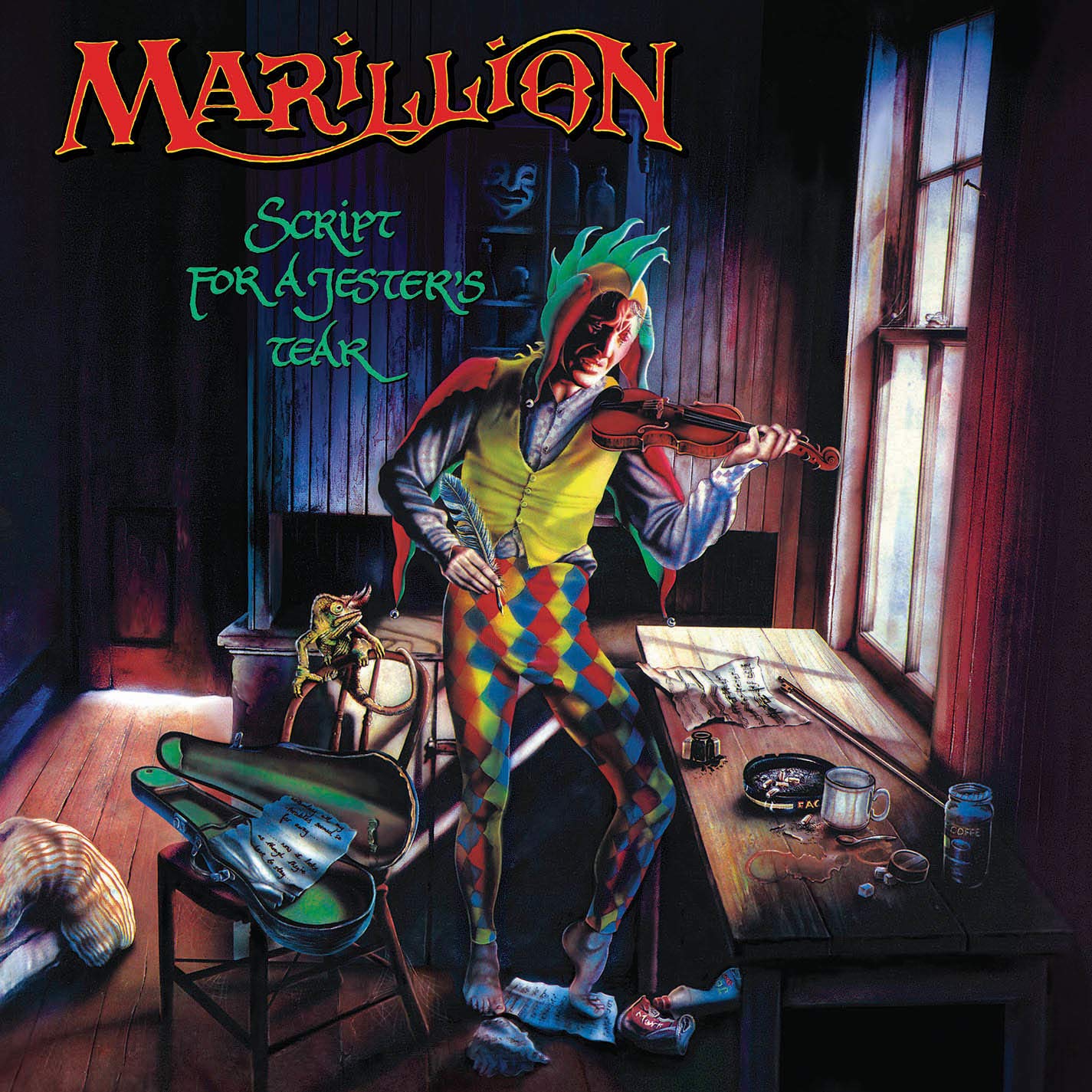
With this album they debuted one of the greatest bands of the progressive neo; Marillion, a debut album that would achieve a perfect union with the sound of Peter Gabriel's Genesis and a style much more accessible to the general public.
It was also the album that would cause controversy among progressive rock fans, because they seemed like a clone of the aforementioned Genesis, with a pompous, complex, dynamic and harmonious rock.
Masterful songs like "Script For A Jester's Tear", "Chelsea Monday", "Forgotten Sons" or "Garden Party" are the perfect counterpoint for the commercial and more accessible "He Knows You Know",
They make up one of the paradigm albums of the 80s and a masterpiece of progressive neo.

Wednesday, May 20, 2020

Marillion-Misplaced Childhood (1985)

In 1985 Marillion released her third album "Misplaced Childhood", which would eventually become her best work and also the most popular and best-selling.
Conceptually devised, it deals with the most private and dark nightmares plus reconciliations with the love of its leader and singer Fish.
With this work the band reached its highest level of creativity and the ideal and absolute balance.
It is also the job where the band shows its maturity, after two great albums, but somewhat inconsistent.
The concept, its interpretive power, perfect harmony, poetic lyrics, cultured language and instrumental precision, made it one of the best albums in progressive rock and an instant classic.

Wednesday, May 13, 2020

Fish-Vigil in a Wilderness of Mirrors (1989)

If there was a time when Fish's career could have been a continuation (and not a painful epitaph) of that of the Marillions of his first era, it was on this record. Fish retained in this release, and to some extent in the second album, the spirit of the music he had done with former band, when together they recorded such resounding works as "Clutching at Straws", swan song of each other: de Marillion , who could still release an album with the spirit, we repeat, from the first period, the essential “Seasons end”.
Both parties lost, at least in our opinion, but at least one could still rescue some of Fish's solo career. In that sense, "Vigil in a Wilderness of mirrors" is not only a good record of Fish, but the best of his career. It can be said that in this round the former lumberjack fund cast the rest, and so we can find four themes that are true wonders: the tremendous opening hymn “Vigil”, the exquisite ballad “Gentleman's excuses me”, the suite “Cliché”, the splendid "The company", or "Family Business", which has become a classic of his repertoire almost at the height of his songs with Marillion, because everything must be said, however brilliant the songs of this debut do not they shadow the themes of their four albums under study with their nurse band. There is even a commercial issue, as it was in "Clutching at straws" (that unfortunate attempt to enter the charts: "Uncommunicated"), the theme is titled "Big Wedge", and to my liking it is well above that attempt of Marillion to enter the lists of success (something that they would repeat already with Hoggart in their rows and with the song “Hooks in you). Definitely, Fish moves much better for the progressive "for all audiences", not an orthodox progressive, nor was Peter Gabriel in his 80s records, but rather, and as Gabriel (who seems destined to emulate all his life) Fish is shown to us as a musician who shares two loves: the symphonic rock of the 70s and low-grade pop, yes, without reaching the levels where they fell, for example, Saga in his time less creative
In any case, an incredible album that I do not think disappoints anyone who has vibrated with Marillion's time with Fish.

Marillion-Holidays in Eden (1991)

In this LP it can be said that Marillion had already become “another” formation very different from the one recorded by the four albums in studies with Fish. The giant singer's departure marked a before and after in the group's history; interestingly, as in other bands, people of a certain age tend to remember Marillion as "the Fish band", when in fact he was much less time than his replacement singer Steve Hoggart, nowadays. a talented man who never wanted to be an imitator or even a continuation of Fish, even though in the round he published with Marillion after the departure of Fish, the essential “Season's End”, that air could still be seen Marillion stale, so to speak.
The truth is that that old air disappears completely in this great work, a work that would already set the tone for later albums such as the incredible “Marbles” or “Brave”, although later Marillion's career fell into some low points of creativity, which is always excusable in some artists who have been publishing albums for so long.
"Holidays in Eden" contains some top themes, quiet themes of a soft and caressing atmosphere, if you think well above what they had done in the 80 groups that tried to convert to the melodic progressive like Saga or Barclay James Harvest, whose releases of those years are well below what Marillion achieved in this album. I recommend everyone to listen to songs as sublime as “The party”, exquisite, or the one that gives title to the album and from which a single was made in which –and this data in my view is curious- Hoggart appears with an image very similar to the one that Peter Gabriel had when he also experienced his changes and became, precisely again, a pop star. Thus, the destinies of Marillion, the artistic destinations, we mean, seem to be linked to the evolution of Peter Gabriel: avant-garde artists (to some extent, of course) in their beginnings, such as the Genesis of Peter Gabriel; and then in high octane pop band when Fish left them, just like Genesis when Phil Collins took command. 

Monday, October 8, 2018

Fish-Sunsets On Empire (1997)

With their fifth studio album, "Sunsets On Empire", Fish delivered their best work since "Vigil In A Wilderness Of Mirrors", released seven years prior. On this album, Steven Wilson, the frontman of Porcupine Tree, co-wrote six of the songs and handled the arrangements, as well as production, actively participating in most of the guitar and keyboard parts. The album's opening track, "The Perception Of Johnny Punter", is one of their most ambitious songs, brimming with hard rock riffs and a symphonic atmosphere. Other tracks like "Goldfish & Clowns" reflect their mainstream side, as does "Change of Heart". Nods to their past with Marillion can be found in "What Colour Is God?", while "Jungle Ride" showcases an Eastern psychedelic feel. However, it is the title track, the most progressive and peak moment of the entire album, which ends in an incredible Floydian finale courtesy of vocalist Lorna Bannon and Steve Wilson performing a brilliant guitar solo inspired by David Gilmour.

Monday, June 11, 2018

Marillion-Marbles (2004)

During the latter half of the 1990s, Marillion seemed to be preaching in the wilderness, releasing a series of rather predictable albums that would mark the lowest point creatively in their extensive discography. Albums like the unenthusiastic "Radiation" (1998), the predictable pop-rock "Marillion.com" (1999), and the more innovative "Anoraknophobia" (2001) left a certain unease among their more purist fans and a low commercial return, leading them to seriously reconsider their immediate future, convinced that this path was leading them nowhere. Thus, three years later they released "Marbles", a sprawling double album where they stepped outside their comfort zone to create one of their most consistent and progressive albums, meticulously delving into their musical origins with an intense and memorable neo-progressive sound. From epic progressive anthems like "Ocean Cloud" to the intense "Neverland", and from the melancholic "The Invisible Man" to the poignant "You're Gone" and "Fantastic Place", they demonstrated that they hadn't yet lost the essential original sound that had begun two decades earlier. However, there was also room for melodic and commercial soft rock, as exemplified by the catchy "Don't Hurt Yourself" and "Angelina". With this superb album (their thirteenth), Marillion entered a phase of great creativity, producing excellent works such as the subsequent "Happiness Is The Road" (2008), "Sounds That Can't Be Made" (2012), and "Fear" (2016).

Sunday, April 1, 2018

Arena-The Visitor (1998)

The third album by the British band Arena is one of the most acclaimed and praised neo-progressive records, an admirable work of intelligent fusion composed of exuberant melodies and vibrant rock under an intricate and passionate musicianship. In this new release, the band introduced a new guitarist, John Mitchell, who replaced Keith Moore, becoming a key figure with his heavy riffs and tremendous melodic solos. Added to this are the haunting keyboards of the group's leader, Clive Nolan, who creates multi-layered sounds, grandiose orchestrations, and dreamlike, spacey synthesizers. For his part, Paul Wrightson's passionate, expressive, yet delicate vocals greatly contribute to this concept album reflecting why it is one of the greatest neo-progressive records in history.

Thursday, August 31, 2017

Galahad-Empires Never Last (2007)

From a mere cover band of some of the great groups of the 70s, to becoming one of the most prominent acts today, Galahad has championed the neo-progressive style of bands like Pallas, Marillion, Pendragon, and IQ, with a career full of superb works focused on modern progressive rock. Founded in the mid-eighties in the UK, their original lineup consisted of Stuart Nicholson (vocals), Roy Keyworth (guitars), Mark Andrews (keyboards), Tim Ashton (bass), and Spencer Luckman (drums). In 1991, they released their debut album, "Nothing Is Written", followed by other highly acclaimed albums such as "Sleepers" (1995) and "Year Zero" (2002), although they always remained somewhat in the background and were consistently considered one of the most underrated bands within the neo-progressive genre. With their eighth release, "Empires Never Last" (2007), Galahad finally achieved mainstream recognition, delivering their best and most acclaimed work. On this album, they subtly departed from neo-progressive metal, delving into a dark and progressive heavy metal soundscape. A solid and well-structured musical foundation, theatrical vocals, harsh guitar riffs, and atmospheric keyboards drive an album brimming with intense and aggressive sounds. Tracks like the portentous "Termination", "I Could Be God", "Sidewinder", "Empires Never Last", and "This Life Could Be My Last", reflect the grandeur of this monumental work of 21st-century modern neo-progressive metal.