

Saturday, September 19, 2020
Weather Report-Sweetnighter (1973)

Frank Zappa-Guitar (1988)

In 1988 he published the double "Guitar", which exclusively includes guitar solos by Frank Zappa himself.
If it was published to demonstrate his guitar skills for those who always said that he surrounded himself with great guitarists or not, we will never know, but this is a clear example for those who thought about the first thing change their mind.
Apart from all this, Frank Zappa was one of the best guitarists of all time and in this album both Zappa and his band exude virtuosity, technique and feelings.
Surrounded by great musicians among which are Steve Vai, Vinnie Colaiuta, Ike Willis or Bobby Martin, among others, makes this work much more interesting, where we can listen to the different genres that he played throughout his career.
Rock songs "Hot Rats", psychedelic blues "Sexual Harassment in the Workplace", rock and roll "Sunrise Redeemer", reggae "That´s Not Really Reggae", ballads "Do Not Pass Go", musical delusions "That Ol´G Minor Thing Again" or superb solos like " Watermelon in Easter Hay".
Friday, September 18, 2020
Metallica-Metallica (1991)

Metallica with this album leaves behind their virtuous trash metal that had elevated them to offer a heavy sound, but with a clean sound and much more accessible than their previous four works.
There is no doubt that the production of Bob Rock contributed to the band recording their most commercial album and at the same time the most remembered, for better or for worse.
"Enter Sandman" with that mythical riff, the creepy "Sad Bad True", the heavy "Through The Never" or "Wherever I May Room" or the halftime "The Unforgiven" and "Nothing Else Matters" made up a superb work heavy metal with a dose of old-time thrash metal.
Until 2018, some 17 million copies of this album had been sold in the United States and a total of 32 million worldwide.
Weather Report-8:30 (1979)
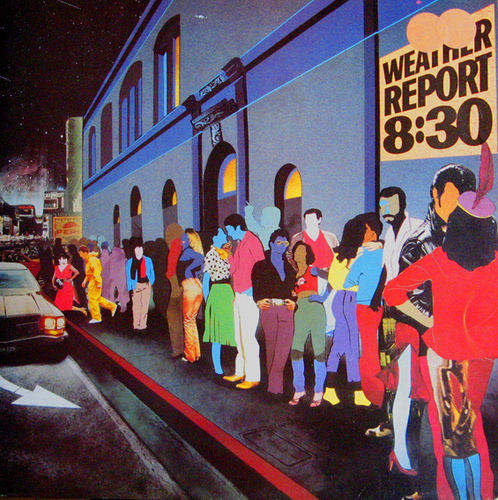
At that time the band consisted of its most classic and successful line-up: Joe Zawinul, Wayne Shorter, Jaco Pastorius and Peter Erskine, in addition to other supporting musicians such as Erich Zawinul.
For many this is a historic recording and one of the best jazz rock live shows ever recorded, with a repertoire loaded with some of the band's best compositions such as the initial "Black Market", the delicate "A Remark You Made ", the classic Miles Davis "In A Silent Way" or the apotheosis "Birland".
This album would get a Grammy award for best jazz performance the following year and a third place on the Billboard Jazz Albums charts.
Pink Floyd-The Wall (1979)

Musically it was an ambitious project in the history of rock, created by a brilliant mind such as Roger Waters, with overwhelming results in sales and in favorable reviews, if Pink Floyd had already embroidered perfection with "The Dark Side of the Moon" with "The Wall" they had surpassed the threshold of final and final work.
A baroque, spectacular and convoluted album, a conceptual album that reaches absolute genius, with a luxurious production and a wealth of anthological texts.
The music perfectly complements what each song is recounting, which makes the listener be mesmerized and captivated in a thousand different ways. One of the greatest masterpieces of music in all its history and of rock in particular.
Black Oak Arkansas-High On The Hog (1973)

"High on the Hog" was the band's fifth album, fourth under study, released in 1973, and is their best work, produced by well-known producer Tom Dowd.
A band that using the best resources of the typical southern rock bands, had three guitarists who gave the characteristic touch to their sound. Big´s southern themes, doses of boogie rock, blues rock and the unmistakable voice of its leader, singer Jim Dandy, made up an album and a band that well deserved much more recognition than it got.
The Jeff Healey Band-See The Light (1988)

He learned to play by listening to the greats of the blues and imitating them with his guitar resting on his lap, in the style of a pedal steel guitar.
Hardened playing in Toronto pubs and venues he would soon build a great reputation and in 1988 he released his first album under the name The Jeff Healey Band and entitled "See The Light".
Together with drummer Tom Stephen and bassist Joe Rockman, this spectacular trio made an album full of magic with that unique and unmistakable style that Healey imprinted in his way of playing the guitar.
Bestial blues rock songs like "Confidence", "My Little Girl", songs with a southern flavor like "Don't Let Your Chance Go", tender ballads like "Angel Eyes" or exciting blues like "That´s What They Say", rounded off an album that made known a blues legend who unfortunately died very young at the age of 41 in 2008, but leaving a beautiful legacy of a dozen great albums.
Thursday, September 17, 2020
Magnum-Escape From The Shadow Garden (2014)

They have always combined virtuosity and melodies perfectly with different styles that have evolved over time, from the progressive rock of their beginnings to the melodic rock of their albums of the eighties and nineties.
In 2014 they released their eighteenth album "Escape From The Shadow Garden", an album that contains a collection of absolutely wonderful songs, with sublime arrangements, some memorable compositions, with those crystalline sounds and the guitars of Tony Clarkin and the tremendous voice of Bob Catley that give the essence to this fundamental and mythical band.
Dare-Belief (2001)

Already in their previous "Calm Before The Storm" they had introduced Celtic elements, but nevertheless they were not as intense and emotional as in this new album, which was their most successful work and a classic of melodic rock.
Packed with great melodic and emotional songs like "Silent Thunder", "White Horses" or "We Were Friends".
Kiss-Alive! (1975)

With this formidable direct double, Kiss obtained great fame and was the trigger for them to be known worldwide.
With a sound ahead of its time which was questioned by its "tweaks" in the studio, visceral and powerful songs such as "Hotter Than Hell", "Nothin´To Lose", "C'mon and Love me", "100, 000 Years", "Rock Bottom" or "Rock and Roll All Nite".
The album stayed on the charts for nothing more and nothing less than 110 consecutive weeks and its sales far exceeded 6 million copies worldwide.
The Beatles-Let It Be (1970)

They also decide that they will create a documentary about how the band prepares for the aforementioned concert. The result of the recording cameras and bad relations between the four musicians in the studio, as well as the uncomfortable presence of Yoko Ono and the little interest shown by John Lennon in the project, result in tense sessions full of hostility, which will result in the resignation of George Harrison. Later there is a change of study and Harrison himself takes up the work (accompanied by Billy Preston) and things softened in part, however in reality he continued to be conflict, to such an extent that the tapes were mixed and rejected several times, finally Lennon he commissioned producer Phil Spector to edit and produce the album (Not without McCartney's rejection, who saw his idea of an album amputated without so much study work).
In general terms, this album can be considered a worthy farewell to a group that shaped popular music as we know it today.
The band's rooftop concert at Abbey Road Studios will be a memorable moment to remember.
Emerson Lake and Palmer-Tarkus (1971)

Emerson's flaming organ and keyboards, backed up by Palmer's sublime and powerful drums and Lake's vocal sensitivity without neglecting his energetic and masterful bass playing, blended together perfectly creating wonderful albums like this "Tarkus".
"Tarkus" is the first work in which they prove to be an authentic group, combining the qualities of each member above the individualities.
The suite "Tarkus" is considered one of the definitive works of progressive rock, full of intensity and an overwhelming virtuosity that leaves the listener breathless.
The 20-minute duration of this impressive suite, partly weighs on the rest of the album unfairly, where powerful songs such as "A Time And A place" is also an anthological gem, or the rock and roll "Are You Ready Eddy?" where the trio shows their eclectic diversity.
Wednesday, September 16, 2020
Pink Floyd-Wish You Were Here (1975)

Conceived as a conceptual work during its recording, several very significant events occurred, the first would be when Syd Barrett would appear unexpectedly while the band was in the middle of recording, something that was essential for Roger Waters to rethink the entire subsequent recording process.
Another fact was the difficulties that the new sound engineer Brian Humphries had when he did not know well the recording methods of Abbey Road Studios.
Before being published "Wish you Were Here" had behind it the ballast of a masterpiece like "The Dark Side Of The Moon", which partly overshadowed this album (at least at the beginning), also the fact that that Alan Parsons was not the sound engineer was taken with some doubts, however, the album does not lose an iota of freshness for it.
Musically this album brings textures and harmonies more typical of space rock than of more linear progressive rock and there are even approaches to jazz at very specific moments.
Highlighting any song in this monumental album is unnecessary since it is a work that must be heard in full in one sitting without defining or evaluating any cut over another.
Bonnie Raitt-Nick Of Time (1989)

However, his following works followed the trend of his first albums and as a consequence his contract with Warner Bros was terminated due to poor sales in the early eighties.
The rest of the decade Raitt is dedicated to politics and goes through a painful period given over to drugs and alcohol.
Almost at the end of the decade he received an offer from Capitol Records and with this label he recorded his tenth album "Nick of time" (1989), with which he finally made it to the covers of music magazines and the charts almost 18 years after its debut.
Influenced by traditional blues, to which he adds a dose of country, to which he combines his good voice and great skill with the guitar and the slider guitar, he achieves an album overflowing with folk blues with warm ballads and cozy mid-tenses.
Actually, nothing changed here from what I had done previously, with the difference that the themes were more resounding and forceful.
A monumental album that would get three Grammy Awards and some six million copies sold.
From now on, Bonnie Raitt's career would emerge in a definitive way collaborating with the best musicians and getting two albums of great impact such as "Luck of The Draw" (1991) or "Longing in Their Hearts" (1994).
Black Sabbath-Paranoid (1970)

"Paranoid" is one of the most iconic heavy metal albums in its history, with a repertoire as sinister as it is infernal, from the lugrube "War Pigs" to the heavy rock "Paranoid" not to mention the sinister "Electric Funeral", the lysergic "Planet Caravan" or the heavy metal anthem "Iron Man".
The Black Crowes-The Southern Harmony and Musical Companion (1992)

Classic rock & roll owes an eternal debt to The Black Crowes, since with their debut album "Shake Your Money Maker" they would once again regenerate a style and return it to the top of the charts.
They borrowed rock with hints of southern sounds, and without sounding like cheap copy and failing badly, they brought it back into fashion in the nineties.
However many doubted the ability of the band to compose their own songs when their first hit was a muscular version of the Otis Redding song "Hard To Handle", however songs like "Twice as Hard" or "She Talks to Angels" they would prove everyone wrong.
With their second album The Back Crowes they would make the definitive leap developing their own style that would take them to number one on the charts with a superb work.
"The Southern Harmony and Musical Companion" is a magical great rock album, with compositions of the highest quality that could perfectly have been published at any time in the 70's, for its genius and that classic hard rock that the greats distilled bands of that time. Thanks to my friend Grey for having introduced me to this band.
Bachman-Turner Overdrive-Not Fragile (1974)
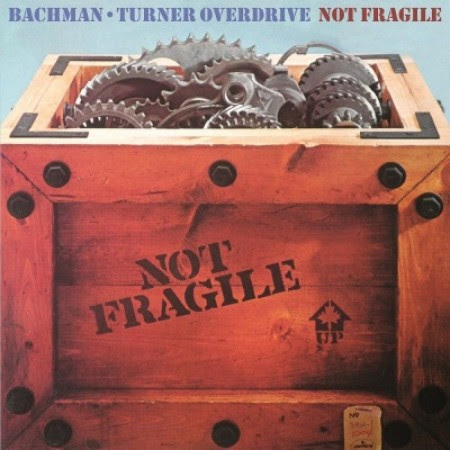
Some time later Bachman recruited his brothers Tim, Robbie and Fred Turner to start another project that they would call Bachman-Turner Overdrive, a curious name inspired by a truck magazine of the time, something that would enhance the image of a band from working class rock.
However, their first two albums were little appreciated and went unnoticed by the general public ("BTO" and "BTO 2"), and would not enter the charts for a while after being published.
For the next album Bachman takes over the production reins and puts a young guitarist named Blair Thornton in charge of the band, which is the ideal repulsive the band needed.
The result is this "Not Fragile", which published in 1974, would be the most successful album of the band, even reaching number one on the North American charts and achieving a surprising platinum record.
The album contained numerous hard-hitting and vigorous rock songs like "Roll on Down The Highway", "You Ain't Seen Nothing Yet", "Free Wheelin" or "Not Fragile".
Bee Gees-Here At Last...Bee Gees...Live (1977)

This double album also closed the first part of an impressive career, achieving platinum disc for its sales shortly after its publication.
Until that moment the Bee Gees had been characterized in themes oriented towards tender ballads, pop rock and even approaches to R&B and dance songs such as "Jive Talkin" or "Nights on Broadway" from their album "Main Course" from 1975.
The repertoire that was finally included in this double album includes a fantastic selection of the band's mythical themes; "Love So Right", "How Can You Mend a Broken Heart?", "You Should Be Dancing", "Nights On Broadway" or "Jive Talkin´".
The album had a great reception, reaching almost five million copies sold around the world, a figure that helped add up to the more than 400 million records that the band has managed to sell throughout its long career.
Chris Rea-The Road To Hell (1989)

Born in the early 1950s in Middlesbrough, England, Rea has been a professional musician since the early 1970s releasing some of the most memorable soft rock albums.
Although it would not be until 1978 when he published his first album "Whatever happened to Benny Santini", with which he would achieve a gold record.
From here on, albums like "Deltics" (1979), "Tennis" (1980) or "Chris Rea" (1982) establish a career in which he begins to be respected and taken into consideration by critics and the public.
His albums cover disparate styles ranging from jazz to blues with great gospel touches that are the sounds that stand out in his work.
In 1983 he self-produced the album "Water Sign" in which his style took a more electronic look and the following works will maintain the same tonic, being very commercially received, "Wired the Moon" (1984) or "Shamrock diaries" (1985).
But the international popularity would arrive with the album "On the Beach" (1986) with which it manages to be number one in different countries with millionaire sales.
The following years will be marked by a series of great albums among which the fantastic "The Road to Hell" (1989) stands out, with which it would rise again to the first position in the charts with more than 7 million copies sold.
An album that contains memorable moments such as the frenetic album title song, the heartfelt "You Must Be Evil", the evocative "Looking For a Rainbow", or the dancing "Texas.
Auberge (1991) his next work and following the trend of the previous one, it would also become an international success, although to a lesser extent than this one "The Road To Hell".
Thunder-Laughing On Judgment Day (1992)

In this debut album the band showed an incipient hard rock of great invoice thanks to full compositions of great quality.
Two years later they would publish "Laughing On Judgment Day" where without leaving the hard rock essence of their first album, there is a greater prominence of the sounds of classic blues rock of the 70s but fused with the freshness and self-confidence of the ninety.
The intense "Empty City", or the halftimes "Low Life In High Places" and "Better Man" along with the cheeky "Everybody Wants Her", proved that the band was not just a promising debut.
Tuesday, September 15, 2020
Jean-Michel Jarre-Oxygene 7-13 (1997)

Examples we have many, from Meat Loaf with his "Out of Hell II" to "Tubular Bells II" by Mike Oldfield to give just two examples that came out well.
In 1997 Jean Michel Jarre thought of continuing that fabulous album that he had released in 1976 "Oxygene", but giving it a more modern approach with the most technologically advanced sounds of the moment.
"Oxygene 7-13" was the title that was given to this sequel and was the product of the logical conological movements that followed the original, which consisted of six.
Jarre in this new installment of "Oxygene" sacrificed much of the original romantic component, changing it for a greater drama and a more calibrated dynamic load, achieving an elegant work that pleases and innovates without surpassing his original album.
Frank Zappa-In New York (1978)

As was customary for Frank Zappa, his performances were not only intended to simply perform songs from previous albums but also to play new compositions and experimentation's that in many cases would later be included in later albums.
An album divided into two well-differentiated parts, the first album with a theatrical and humorous theme where "Puky's Whips" stood out, the burlesque "Honey, Don't You Want A Man Like Me", the blues "The Illinois Enema Bandit" or various instrumentals such as "Cruisin´For Burgers" or "I Promise Not To Come In Your Mouth" songs both where the drummer Terry Bozzio and the keyboardist Eddie Jobson do a great instrumental job.
The second album is directed towards the virtuous part of Zappa himself and his band in general, as demonstrated in "The Purple Lagoon / Approximate", "Manx Needs Women" or "Black Page".
On "The Torture Never Stops" Zappa performs one of his now legendary guitar solos, which is technically flawless, while "Sofa" is one of the album's most memorable moments with the full band appearing in unison with a high degree of virtuosity.
A band that among others was comprised of very great musicians who would end up carving out reputable solo careers later: Eddie Jobson, Patrick O'Hearn, Terry Bozzio, Randy Brecker, Mike Brecker, Dave Samuels or Ray White.
Monday, September 14, 2020
Yes-Union (1991)

This nonsense working method would entail a lot of work for such an album, also the cover would once again be the work of Roger Dean and Eddie Offord would also appear in the production work.
The album contained, despite an evident little cohesion between them, very valid songs such as the frenetic "I Would Have Waited Forever" the excellent "Masquerade", the progressive "Miracle of Life" or the interesting "Silent Talking", the rest is enough. more predictable without too much interest coming from those who come the music.
An album that without being a bad job was inferior to the one that ABWH had released two years earlier as it suffered from a cohesion between the two fractions of the band that recorded this curious "Union".
ABWH-ABWH (1989)

On the one hand Jon Anderson, Bill Bruford, Rick Wakeman and Steve Howe had to settle for signing their new album as ABWH (the initials of their last names) to officially launch the album and on the other the so-called YesWest formed by Chris Squire, Alan White, Tony Kaye and Billy Sherwood, did the same.
After ironing out rough edges they all signed an album with an all-eight band called "Union" in 1991, but before that the first four had released their desired "ABWH" in 1989.
An album that a priori had all the ingredients to be one of Yes's best works despite not having the official name, and that would even have a cover designed by Roger Dean himself.
However, it was not what was expected despite containing good moments and in a way it manages to sound like the Yes of its best time in certain songs such as the initial "Themes" or "Quartet", the rest are a kind of hybrid between which they did Asia or GTR like "Birthright", "Order of the Universe" or songs that seemed more taken from the works of Jon Anderson with Vangelis than from Yes as a band; "Let's Pretend" or "Fist of Fire".
Argent-Encore: Live In Concert (1974)

Sunday, September 13, 2020
Argent-Nexus (1974)

Deep Purple-Made In Europe (1976)

Queen-Live Killers (1979)

"Live Killers" was recorded during the European tour of the album "Jazz", it is an example of what this band did at that time in a so raw and real way, there we have to demonstrate it with the initial and tremendously fast "We Will Rock You", the challenging "Let Me Entertain You" or the poisoned "Death On Two Legs", and so hard songs with calmer moments go by until they reach "Bohemian Rhapsody" and a series of energetic songs that leave the public breathless like "Tie Your Mother Down", "Sheer Heart Attack" and the encore "We Will Rock You" at its original speed, to end with the rock arrangement of the British anthem "God Save The Queen" that closes this magnificent double live, far superior to any others that have subsequently been published.
Status Quo-Live (1977)

A live show based on sweaty boogie rock they reel off the best of their repertoire up to that date like the forceful "Big Fat mama" or "Is There a Better Way", the eternal and classic "Caroline" or the medley "Blackwater / Just Like Me", without forgetting the long "Forty Five Hundred Times" and "Roadhouse Blues" by The Doors, which show us how funny, visceral and sweaty direct that the Status Quo did at that time.
Saturday, September 12, 2020
The Byrds-Mr.Tambourine Man (1965)

They were so great that two of the greats of rock in history like The Beatles or Bob Dylan were influenced by their style, but nevertheless The Byrds were also influenced by the magic of these two musical monsters.
"Mr Tambourine Man" is one of the most incredible and highest quality debuts that have ever been recorded, no matter that a large part of the songs recorded here were versions, but the relevance of this album is so enormous that it is fundamental for evolution rock in general and folk rock in particular.
Great vocal harmonies, and delicate sounds where Roger McGuinn excels with his emblematic twelve-string guitar, which would become the reference for this style and the Byrds in particular.
The Beatles-Revolver (1966)

Become one of the most important albums of psychedelic, a musical genre in which they knew how to move with authority and sufficiency.
Songs like "Taxman", "Yellow Submarine", "Eleanor Rigby" or "Here, There and Everywhere" show why this album is another Liverpool masterpiece.
The Beatles knew how to navigate a style as broad as psychedelic without losing an iota of their identity, something that they knew how to do with all the styles with which they set out to do.
An album that demonstrated the greatness of these four musicians who were key pieces for the future of music.
Nazareth-´Snaz (1981)

“It’s Naz” is the title of Nazareth’s first live album, recorded during the tour following the release of “The Fool Circle” at the Pacific Coliseum in Vancouver, Canada, in May 1981. It is considered one of the best live recordings of the 1980s and one of the top 100 live albums in the history of rock music.
At that time, the band consisted of original members Dan McCafferty (vocals), Manny Charlton (guitar), Peter Agnew (bass), and Darrell Sweet (drums), along with supporting musicians John Locke (keyboards) and Billy Rankin (guitar).
This superb double album is composed of an irresistible repertoire of their greatest classics such as the powerful and forceful “Telegram”, “Razamanaz”, “Dressed To Kill”, “Hair of the Dog” or “This Flight Tonight”, as well as covers such as the superb “Java Blues” or the electrifying versions of J.J. Cale’s “Cocaine”, ZZ Top’s “Tush”, or The Yardbirds’ “Shapes of Things”.
Bob Marley and The Wailers-Live! (1975)

Six months later the album "Live!" with a selection of songs belonging to those two nights and which, contrary to the usual at that time, was not released as a double album, but as a single with just seven songs.
On those two nights Bob Marley and The Wailers offered two fantastic performances with a band in good shape and a repertoire full of great songs such as the initial and energetic "Trenchtown Rock", the extensive and incendiary "Get Up, Stand Up" or the wonderful "No Woman, No Cry".
"Live" is an explosive live show, with a totally devoted audience, explosive guitars, contagious choirs and a feeling of revolution on the surface.
From here and as a consequence of the success of those performances and the great reception that this album had, Island Records would reissue with great success the albums "Catch a Fire" and "Burnin´" by The Wailers worldwide.
Friday, September 11, 2020
Rainbow-Long Live Rock´n´Roll (1978)

"Long Live Rock´n´Roll" was the band's third album released in 1978 and a worthy successor to the fantastic predecessor "Rising".
This would be Ronnie James Dio's last album as a vocalist, as a consequence of different musical criteria with Ritchie Blackmore.
Equally here we would already participate neither the keyboardist Tony Carey, nor the bassist Jimmy Bain who were replaced by David Stone and Bob Daisley, keyboardist and bassist respectively.
"Long Live Rock´n´Roll" is next to mentioned "Rising" the two best works of Rainbow, with this new album the band reached the total sublimation and Dio became the heavy metal singer par excellence.
A sensational job where the whole band made the most of all their resources, getting generational hymns, such as the title track of the album, or powerful songs like "Kill The King", or fantastic ballads like "Rainbow Eyes". A true masterpiece of heavy metal and hard rock.
The Allman Brothers Band-Seven Turns (1990)

Greg Allman, Dickey Betts, Jai Johanny and Butch Trucks, the original four members created together with Haynes the album "Seven Turns" (1990) which would put them back in the forefront of rock music today.
Seven Turns is unlike his works from the 70s, a work oriented towards the blues to the detriment of southern rock, something that although it does not detract from the album's merits, it does resent it to some extent.
Wonderful compositions like the blues rock "Good Clean Fun", the country rock "Let Me Ride", the blues "Low Down Dirty Mean", the lilting "Gambler's Roll" or the instrumental "True Gravity" compose his best work since "Idlewind South".
Coverdale Page-Coverdale Page (1993)

After two years of collaboration they decided to record and release an album that they simply titled "Coverdale Page" which was released by Geffen Records in 1993.
Following a line similar to Page's solo album "Outrider" released five years earlier, it is a good hard-hitting rock work where the influences of Led Zeppelin and Whitesnake are very evident, seasoned with the magnificent voice of a Coverdale in top form and without a doubt the best Robert Plant emulator.
Energetic rock like "Shake My Tree", abrasive songs like "Absolution Blues", exciting songs "Take Me For a Little While", intense ballads "Take a Look at Yourself", or forceful blues "Pride and Joy" and "Whisper A Prayer For The Dying" resulted in an album that, without becoming a masterpiece, did demonstrate the talent of two of the greatest rock icons in a state of grace.
Argent-Circus (1975)
5.jpg)
Joe Satriani-Flying In A Blue Dream (1989)

Unlike his predecessor "Surfing With The Alien" Satriani presented much more elaborate compositions, with a progressive experimental evolution as well as a much longer duration than the two previous works in which they barely exceeded 30 minutes.
With this album Satriani would once again be nominated for the Grammy Awards in addition to achieving great sales in the American market.
An album full of explorations of different styles, from instrumental exercises like "Flying in a Blue Dream", or "The Mystical Potato Head Groove Thing", to captivating melodies "I Believe", powerful rock "Ride" to guitar experimentations like "The Forgotten (Part 2)" or "The Bells of Lal (Part 2)".
Thursday, September 10, 2020
Journey-Captured (1981)

With a change in which even the aesthetics of the covers were reflected adopting a beetle, as a logo that began to be used to identify the group, and which is inspired by Egyptian art and religion for being a symbol of self-creation, rebirth, renewal, transformation and regeneration.
This logo has graphically evolved on all their albums to become the hallmark of Journey
The first album that came out under the new style was "Infinity" in 1978, which became his first platinum album pushed by the single "Wheel in the Sky." At the same time, the band became a group of so-called Arena rock, filling stadiums throughout the United States.
However, this new style did not sit well with drummer Dumbar, who would leave to later join Jefferson Starship, in his place came Steve Smith.
In 1979 the band released "Evolution" and in 1980 "Departure" which became instant hits and were followed by the double live album "Captured", which reached number 9 on the charts. This last album surprised the critics by the rock style of the interpretations, and is that in "Captured" Journey they captured seventy minutes full of hard and energetic rock led by the colossal voice of a Steve Perry who had arrived with the great "Infinity" and that dazzled in the following "Evolution" and "Departure", contrasting in this live show that he had few rivals both melodic and rockers. To show the hardness and sweetness of "Line On Fire" and "Lights" where he rocks with that feeling soaked in the best of the Motown sound, the rest is an overwhelming repertoire in which Neal Schon proves to be one of the great guitarists. Compared on many occasions to Van Halen in terms of dexterity, with a state of anthological grace he achieves sublime performances in such powerful classics as the opening "Where Were You" or the electrifying "Dixie Highway".
"Captured" is a majestic and unrepeatable live double, the end of the era of the hardest and most explosive Journey, from here the band would enter a turning point, because with the entry of Jonathan Cain and some pop rock compositions more accessible led in 1981 to the greatest success of the band; his album "Escape".
The Shadows-20 Golden Greats (1977)

They were originally called The Drifters, until in 1958, Cliff Richard called them to be his support band and thus they were launched to stardom and landing a record deal.
Cliff Richards and The Shadows made numerous tours in the period from 1958 to 1968.
Yet The Shadows' career outside of Cliff Richard was riddled with success, with over 50 singles entering the UK Top 20 from the late 1950s to 2000.
Considered one of the avant-garde bands in instrumental rock, where styles such as pop, rock, surf and rock roll were present in all their albums.
With more than a hundred albums published between albums, live albums, compilations and singles, more than 40 million have been sold without counting those signed as Cliff Richard and The Shadows.
Pioneers of the Fender guitar, The Shadows ranks fifth among UK singles sellers, some of them including "Apache", "Kon-Tiki", "Wonderful Land", "Foot Tapper" and "Dance On!", the vast majority of them instrumental.
In 1977, the compilation "20 Golden Greats" was published, where a review of their most successful singles was made, thus achieving another platinum record for their total sales.
Triumvirat-Spartacus (1975)

With an identical configuration (bass, drums and keyboards), and due to their identical sound fully identified with the EL&P sound guidelines, this group was formed in the early 70s in the German city of Cologne under the leadership of keyboardist and voice Jurgen Fritz, author and producer in addition to all the group's albums.
The band was completed by Helmut Köller (bass, guitars and vocals) and Hans Bathelt (drums).
At the end of 1971 the English label Harvest, specialized in progressive groups of EMI, offered them a contract and published their first album "Mediterranean Tales" (1972).
In this first work the band shows a power and a more than acceptable sufficiency, that without reaching the levels of EL&P they leave their virtuosity well established, in songs like the suite "Across the Water", an excellent song where Fritz demonstrates his skills with keyboards.
With this album, the band manages to be present in continuous tours of Europe that catapult them to the Olympus of the great progressive bands of the 70s.
In 1974 the second album "Illusions on a Double Dimple" (1974) would appear, which places them in the American and English rankings.
In this second album, the band opted for more conventional themes in terms of their timing and a greater emphasis on the voices as demonstrated by the songs "Lucky Girl" or "Flashback", but it also contained instrumental themes typical of their virtuoso style such as "Double" or "Last Dance".
Later the group embarks on a great tour that would include the United States where they heel Fleetwood Mac and reap a triumphant tour.
"Spartacus" (1975), his next album, means his best work and ultimately one of the best progressive rock albums of the 70s considered by many one of the masterpieces of the genre.
In part this album recovered the pompous essence of the first album, but with an impeccable production and prodigious compositions such as the rhythmic "The Capitol of Power" or the splendid "The Sweetest Sound of Liberty" and "The Hazy Shades of Dawn".
The album manages to reach the top of the charts on both sides of the Atlantic and definitely confirms the band.
But from here on Triumvirat enters a descending line partly due to the continuous changes produced in it.
Vangelis-1492: The Conquest of Paradise (1992)

Ridley Scott made a film in which a situation similar to that of the Tower of Babel took place: a few Spanish actors, a French Christopher Columbus, an American Queen Elizabeth ... It is clear that the historical rigor was obviously suffered, and probably was one of the causes of its unfair commercial failure.
The entire film and as it would happen a decade before with another film masterpiece and its soundtrack "Blade Runner" was actually an immense video clip in which the music and sounds created by Vangelis, almost constantly accompany the images creating unique environments. All the sound creativity manifested in the form of a soundtrack was unable to be reflected in a disc that contained everything that the musician worked on, and coinciding with the premiere of the film the "official" soundtrack was published, which and due to its timing (not yet it is understood that it was not published as a double album) it does not contain much less all the music of the film and if instead it contains musical pieces that are not included in the film itself.
But unlike the film, the album that contained the soundtrack was a resounding sales success.
Coming from Vangelis we already know that his is a pure electronic composition, of course, but that it adequately captures the epicism of the story, despite breaking the fine line between his own musical style and the service he provides to the film on certain occasions. In addition, his desire for prominence is imposed on the images of the film - due, above all, to the fact that he surpasses them. The isolated musical composition is superb and spectacularly beautiful, as evidenced by that imposing and stately central theme that, in my opinion, although sacrilege, far exceeds that of his famous "Chariots of Fire".
The album (as evidently the film itself) is an almost interrupted succession of impressive choral passages, electronic ambient sounds, beautiful melodies of medieval, tribal, dreamy influences ... and acoustic sounds that cover a wide range of instruments, from violins to mandolins. , including flutes, Spanish guitar, and even in one of the songs a flamenco singer, in addition to the inevitable electronic sounds so characteristic of Vangelis
Perhaps the most striking thing about this album are the choral pieces of which, without a doubt, one of them, has become a classic of current music, with a strange vocabulary in the meaning of the words and is that this song is built with a curious invented language ... without a doubt a true jewel of electronic music in particular and contemporary music.
The Flock-The Flock (1969)

The band records their first album, honestly called "The Flock" in 1969, in which some great themes are already glimpsed, such as "Clown" or the long-developed theme "Truth", made from a blues structure. With the song "Tired of waiting", they managed to enter the charts and their presence in the famous CBS compilation, "Fill Your Head with Rock" (1970), a double album that would garner spectacular sales around the world, and whose cover was a spectacular photo of Goodman with the violin, definitely settling them on the market. A year later "Dinosaur Swamps" would arrive, a different work from the first, where the blues is no longer so present, much more progressive and partly experimental with enough rigor, with country nuances and very well polished.
Genesis-Seconds Out (1977)

The short-term result will be settled with the publication of two memorable albums, "A trick of the tail" and "Wind & Wuthering", in which Phil Collins took the role of new frontman of the band and the consequent incorporation for the shows of a battery that allowed Collins himself to take care of the main voice.
The first chosen for this task was initially Bill Bruford, former member of the legendary bands such as Yes or King Crimson, however his career was short-lived, being replaced by ex-Frank Zappa, Chester Thompson, a drummer that will remain until the end of the band well into the 21st century.
At the beginning of 1977 the group decided to publish a double live that they would call "Seconds Out", in reference to the famous phrase used in boxing to indicate that the fight is going to begin and the boxer will be left alone in the ring without any extra support.
The album in double LP format was recorded almost entirely in the shows held in Paris between June 11 and 14, 1977. By then the group's performances had grown massively supported by large individual performances and concerts with a spectacular staging unpublished that accentuated the always latent drama of his music. The magnificent achievement of this sound document is that many of the recordings sounded superior to their studio originals.
Just listen to "Robbery, Assault and Battery", for example, or the transcendental instrumental "Los Endos", which would become a perennial classic of his live performances. The gems on the album, masterfully executed, were two classic songs from the album "Selling England by the Pound"; with the insurmountable "Firth of Fith" (with Tony Banks and Steve Hackett in a state of grace) and "Cinema Show", the only recording on the album where Bill Bruford appears on drums. Perhaps one of the best progressive rock recordings ever heard.
As the list of songs that make up this superb double album goes by, we come across true gems like the powerful and tearful "Squonk", the iconic and eternal "The Carpet Crawl", the also iconic "The Lamb Lies Down on Broadway", linked to the final section of a jewel of theatrical rock that Genesis masterfully embodied, such as the dramatic "The Musical Box".
And so the group is encouraged to reserve one of the four sides of the discs to include the complete fantastic mini opera "Supper's Ready", with more than 20 minutes of duration, where all the interpretive and compositional virtues of a key group in British and world progressive music, which over the years would become a sacred icon of symphonic rock.
"Seconds Out" is and will be a timeless classic of 20th century popular music and one of the greatest live recordings of all time.
Taste-On The Boards (1970)

Founded in 1966 by guitarist Rory Gallagher in the Irish city of Cork, this group should have taken over from Cream, with its avant-garde blues of enormous strength and above all with a guitar that did mischief and was a genius with the six strings.
Its beginnings took place in England and Germany where the band formed by Eric Kitteringham on bass and Norman Damery on drums accompanying Gallagher, made a defined but inconsistent blues rock.
Back in Ireland Gallagher reformed the band with Richard McCracken on bass and John Wilson on drums.
With this new line-up they return to London but they are hardly lucky in the face of the competition that then prevailed in the British city, since John Mayall and his Heartbreakers, Fleetwood Mac and Ten Years After had a monopoly on the genre in those years.
For some time they performed at the mythical Star Club in Hamburg and were successful to the point that they were required in England where they began to gain some prestige on the English blues circuit.
After signing for the Polydor label, they published their first album Taste (69), which did not achieve the expected success.
The following months they toured the United States with Blind Faith to later do the same with John Mayall in Germany.
After a few months and working with stars like Clapton, Mayall or Winwood, this experience was captured in the band's next album "On The Boards" (70), one of the best white blues records in history.
Topics as basic as "On the Board", "Morning Sun", "What's Going on" or "It's happened before ..." place them at the same level as any leading blues rock band of the moment.
After a sensational performance at the Isle of Wight festival, sharing the bill with Jimi Hendrix and The Who, it is when Rory decides to continue his solo career thus ending an exciting story that had just begun.
Dave Greenslade-The Pentateuch of The Cosmogony (1979)

His solo career began just after finishing his adventure with Greenslade and his 1975 album "Time and Tide", with his first album "Cactus Choir" a year later.
For his next album "The Pentateuch of the Cosmogony" (1979), the keyboard player took a risk in a monumental work of more than 80 minutes that with the passing of time has become a cult album as well as an influence on later sounds such as new age or ambient music.
With a luxurious presentation of cover and design by Patrick Woodroffe, with illustrations and an extensive booklet, Dave plays all kinds of keyboards, which together with the collaboration of Phil Collins on drums achieves a very electronic sound with a lot of percussion with a music of avant-garde that however for many fans would be somewhat pompous and the work of an egotistical musician.
Argent-All Together Now (1972)

In this work, the band leaves behind the lines that it had drawn in the first two albums, deriving its style in more forcefulness, sound and depth in its compositions. However, it is not a work of great progressive purity.
The ego of its two leaders Rod Argent and Russ Ballard are present in this album in an obvious way, while Argent wants prominence for his keyboard as demonstrated in "Hold your head up" which is the hit of this album or in "Pure love" where he performs An introduction of more than 3 minutes only of keyboards, Ballard unleashes the creativity that he carries and that he had not been able to express in all its dimensions until then distilling blues, funky and rock and roll through his fresh guitar style, restless and dynamic that makes the songs acquire commercial overtones, some of them even danceable.
Booker T. and the MG´s-The Best Of (1968)

Since adolescence he played in a band called Triumphs, in which he was the fundamental piece.
A decade later, in 1962, Booker formed a small group that he called MG´S and for this he recruited Al Jackson on drums, Donald Dunn on bass and one of the great talents of the Stax label, Steve Cropper as guitarist.
The first album resulting from this union registers an unprecedented success and reaches number 1 and reaches one million copies sold, the song was titled "Green Onions".
From that moment on, Booker T. and the MG's career is prolific collectively and individually.
The MG'S will also be the base of the Mar-Keys, the session group of all the recordings of the greats of the Stax label, artists such as Isaac Hayes, Sam & Dave, Eddie Floyd or Wilson Pickett among others, creating a characteristic sound and full of quality.
Back to the Booker T and the MG'S in the successive years they will be publishing albums one after another until the beginning of the seventies when they practically stop recording discs to only act until today with numerous changes in their later formations.
Legendary songs like "Soul limbo", "Hang ´Em High" or "Time is Tight" have gone down in the annals of instrumental black music history.
In 2007 they became part of the Rock Hall of Fame and that same year they received the Grammy for their artistic career.
Subscribe to:
Posts (Atom)